The health sector is also in the midst of a giant transformation, and center stage in all of it is mobile health (mHealth) services. As the utilization of smartphones, wearable technology, and online platforms continues, mHealth has emerged as a critical connector connecting patients, doctors, and healthcare systems. From online consultation to AI-based fitness monitoring, mHealth services are no fad—they are the future of access, efficiency, and individuality in healthcare.
Increasing Need for mHealth Solutions
The world’s healthcare systems in the past decade were plagued by an aging population, increasing incidences of chronic conditions, and access barriers to effective care in rural areas. These opportunities paved the way for the digital solutions in healthcare, and in first place are the mHealth services.
mHealth delivers healthcare directly into the palm of the hand through the use of mobile applications, wearable devices, and cloud centers. Patients are now in a position to monitor vital signs, obtain medication reminders, attend doctor appointments online, and have access to preventive care services without entering a hospital.
The COVID-19 pandemic drove adoption as individuals and clinicians reached for telehealth and remote monitoring systems in preference to visiting hospitals. What was originally a response in a crisis situation has now come to be a fixture in modern healthcare.
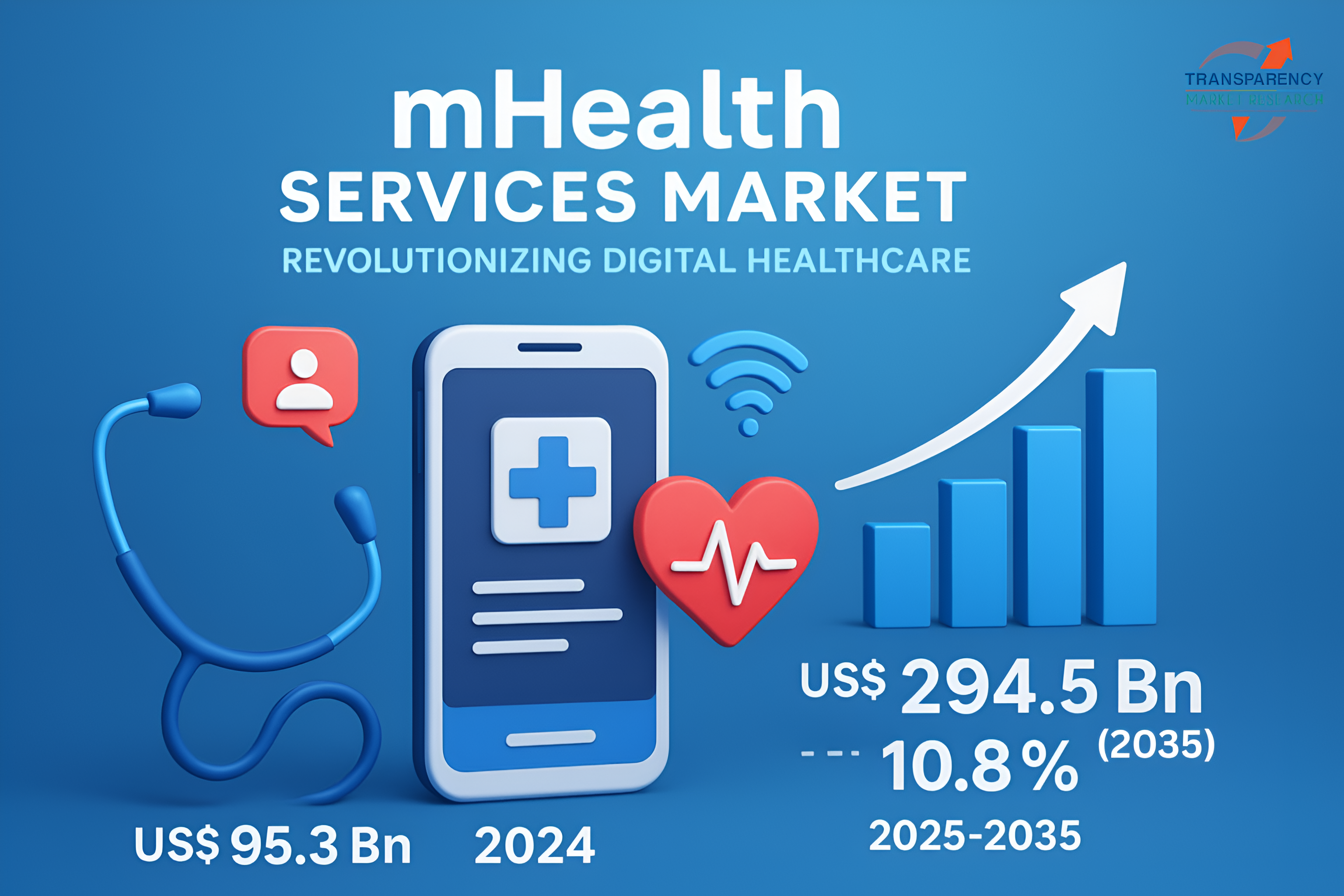
The world mHealth services market was approximately US$ 95.3 Bn in 2024. The market is expected to register a 10.8% CAGR during 2025 – 2035 and reach above US$ 294.5 Bn by 2035. This is a reflection on how the world is seeing a transformation in how care is provided and utilized through the new kinds of digital first approaches in healthcare.
Important Growth Factors
1. Smartphone Penetration
As there are billions of mobile phone users worldwide, mHealth applications can link healthcare providers and patients instantly. Mobility has now been a fundamental enabler of digital health.
2. Wearable Health Devices
These devices are connected with apps, and through apps, they offer real-time monitoring of a person’s health. These devices assist in early detection, as well as in preventive care.
3. Increase in Chronic
Lifestyle-related conditions such as obesity, hypertension, and diabetes need continuous follow-up and attention. mHealth services are personalized in their approach in managing lifestyle-related conditions.
4. Government Initiatives and Investments
Cities are making investments in digital healthcare infrastructure, aiming to decongest hospitals and make care accessible and affordable. Telemedicine policy adoption is contributing significantly to driving industry growth.
5. Consumer Preference for Convenience
Consumers are coming to prefer teleconsultations and online monitoring as a time-saving convenience over hospitals as a visit destination. This trend is driving mHealth into the mainstream.
Expanding Uses of mHealth
The coverage of mHealth continues to spread rapidly across many healthcare sectors:
- Teleconsultations: Patients can consult doctors online without geographical barriers.
- RM: Wearable sensors allow the continuous, real-time monitoring of heart rate, glucose, and many other parameters.
- Mental Health & Wellness: Stress management, therapy, and meditation apps are on the upswing.
- Management of Chronic Disease: Continued monitoring optimizes patient outcomes in chronic disease.
- Fitness & Preventive Care: Nutrtitional apps, online fitness coaches, and wellnes programs help individuals build healthier living habits.
Competitive Analysis of Major Leaders in mHealth Services Market
Few organizations involved in the business of mHealth services are expanding their telehealth services by offering mental support, management of chronic conditions, and preventive services. This involves provision of virtual consultation, therapy, and wellness programs.
Apple Inc., Google Inc., Koninklijke Philips N.V., Medtronic, OMRON Healthcare Co., Ltd., Johnson & Johnson, AT&T, Qualcomm Technologies, Inc., Veradigm LLC, Samsung Electronics Co. Ltd., Cisco Systems, Inc., AirStrip Technologies, Inc., Practo, HealthifyMe Wellness Private Limited, and Netmeds are a few leading companies in the world marketplace.
These firms are making investments in AI-powered healthcare platforms, cloud-based ecosystems, and connected medical devices in order to build user and clinical experience.
The Future Perspective: What Next
The future looks bright for the mHealth services, and innovation and partnership are the focus. The important trends currently driving the market are:
- Incorporation of AI & Machine Learning in predictive analytics on healthcare.
- Smooth and rapid 5G-driven mHealth services for exped.
- H Healthcare data security through blockchain, ensuring the secure sharing of confidential medical data.
- Spread of personalized medicine, with apps providing individualised solutions in healthcare depending on lifestyle and genomic information.
As the industry grows, patients are likely to feel increasingly empowered in the management of their own well-being, and care givers are likely to benefit from better diagnostic, monitoring, and administration tools.
Summary
The mHealth services market is turning healthcare into a more accessible, patient-centered, and technologically savvy system. With increasing adoption worldwide and big industries making shrewd investments, the future of healthcare delivery is yet to be enriched significantly by mHealth.
For patients, it translates into greater access and convenience. For doctors and hospitals, it translates into scalability and efficiency. And for the world healthcare system, it provides a long-overdue answer to close the demand and supply gaps.