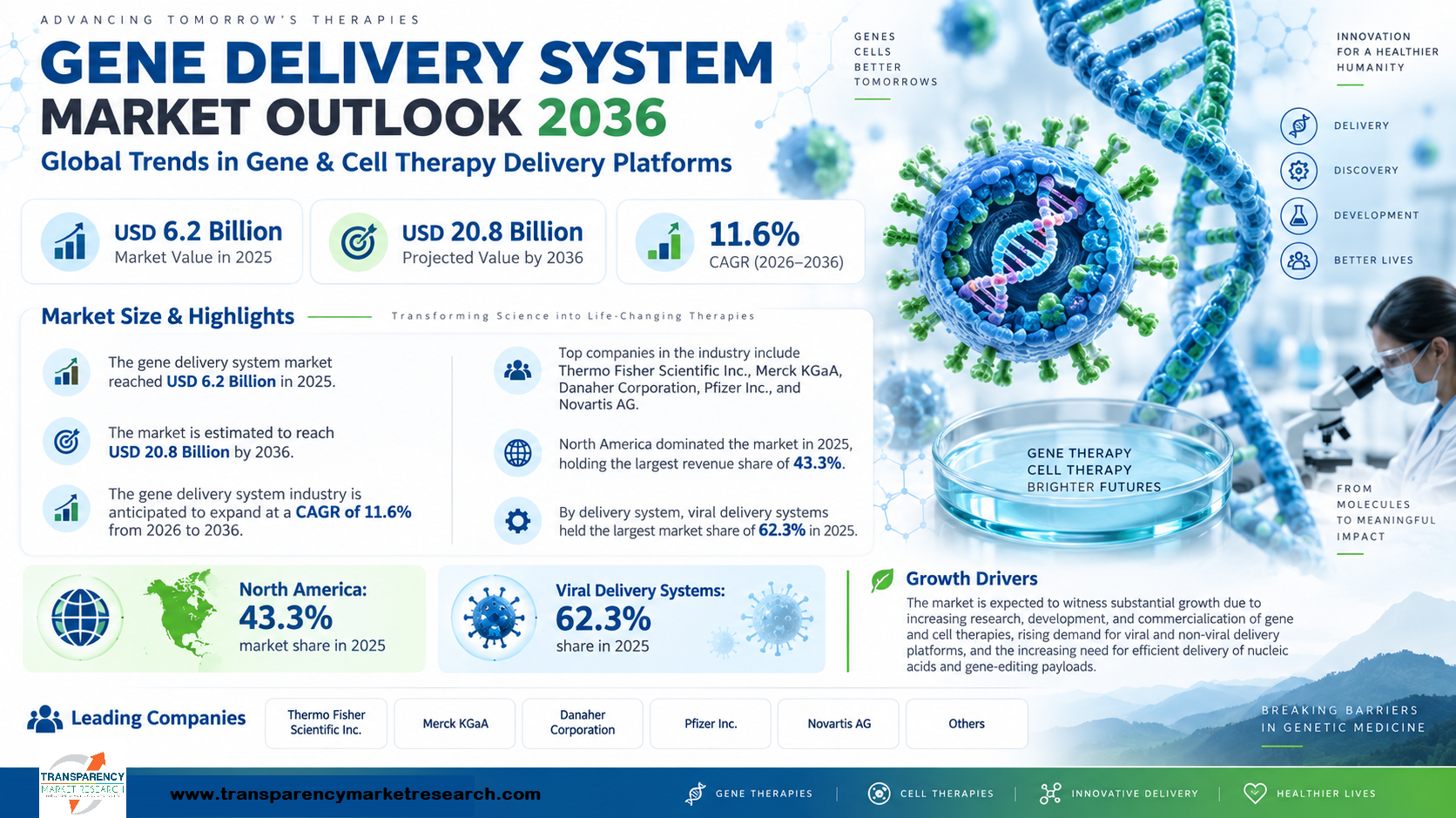
The gene delivery system market is entering a strong growth phase as the development of gene therapies, cell therapies, genome editing, and RNA-based treatments continues to expand. Gene delivery systems play a critical role in transporting genetic material into targeted cells so that therapeutic genes, RNA molecules, or genome-editing components can perform their intended functions.
The global gene delivery system market was valued at USD 6.2 Billion in 2025 and is projected to reach USD 20.8 Billion by 2036, expanding at a CAGR of 11.6% from 2026 to 2036. Increasing investment in advanced genetic medicines, improvements in delivery platforms, and growing research into targeted therapies are expected to support market expansion over the forecast period.
What Are the Factors Driving the Gene Delivery System Market?
One of the major factors driving the gene delivery system market is the rising adoption of gene therapies. Gene therapy is increasingly being explored for the treatment of inherited disorders, cancers, and other complex diseases where conventional treatment approaches may have limitations. As more gene-based therapies progress through clinical development and commercialization, the demand for efficient and reliable delivery technologies is also increasing.
Advancements in gene delivery technologies are another important growth factor. Researchers and biotechnology companies are developing improved viral and non-viral delivery systems designed to enhance delivery efficiency, improve targeting, and address safety and manufacturing challenges.
The increasing use of viral vectors, including adeno-associated virus and lentiviral-based platforms, has strengthened the role of delivery systems in modern therapeutic development. At the same time, non-viral technologies such as lipid-based systems and other engineered delivery platforms are attracting attention because of their potential for scalable manufacturing and flexible genetic payload delivery.
Growing Role of Gene Therapy and Cell Therapy
Gene therapy represents a major application area for gene delivery systems. These technologies enable the transportation of therapeutic genetic material into cells, supporting the development of treatments for diseases that previously had limited therapeutic options.
The expansion of cell therapy is also creating opportunities for gene delivery technology providers. Cell-based treatments often require genetic modification of cells before they are administered to patients. Delivery systems can therefore become an important component of the manufacturing workflow.
The growing development of CAR-T and other engineered cell therapies is contributing to demand for technologies capable of introducing genetic material into cells efficiently. As pharmaceutical and biotechnology companies expand their cell therapy pipelines, demand for specialized gene delivery platforms is expected to increase.
Genome Editing and RNA Therapeutics Create New Opportunities
The rapid development of genome editing technologies is creating additional opportunities for the gene delivery system market. Genome editing approaches require the delivery of editing components to specific cells. Efficient delivery is therefore essential for translating genome-editing research into potential therapeutic applications.
Similarly, the growth of RNA therapeutics is increasing the need for delivery technologies that can transport RNA molecules into target cells while protecting them from degradation. Advances in lipid-based and other non-viral delivery technologies are supporting research into RNA-based treatments.
The broader development of genetic medicines is encouraging companies to invest in delivery systems that can address different types of genetic payloads. These include DNA, RNA, gene-editing components, and other biological materials used in therapeutic development.
Viral and Non-Viral Delivery Systems
The market is broadly categorized into viral delivery systems, non-viral delivery systems, and physical delivery technologies.
Viral delivery systems have an established role in gene therapy because engineered viral vectors can efficiently introduce genetic material into cells. Continued improvements in vector design and manufacturing are supporting their use across therapeutic development programs.
Non-viral delivery systems are also gaining attention. These platforms can offer flexibility in terms of payload selection and manufacturing, while researchers continue to work on improving delivery efficiency and tissue targeting.
Physical delivery technologies represent another segment of the market and include approaches designed to introduce genetic material into cells through physical mechanisms. Continued innovation across these delivery categories is expected to expand the range of technologies available to researchers and therapeutic developers.
Applications Across Healthcare and Life Sciences
Gene delivery systems have applications across several areas of biotechnology and healthcare. Gene therapy, cell therapy, genome editing, RNA therapeutics, and vaccine development are among the key application areas.
Research and preclinical applications also represent an important part of the market. Academic institutions, pharmaceutical companies, biotechnology firms, and research organizations use gene delivery technologies to study disease mechanisms, validate therapeutic targets, and evaluate potential treatments.
The technology can also support the development of new vaccines and genetic medicines by enabling the delivery of specific biological payloads. As research moves from laboratory studies toward clinical development, scalable and reproducible delivery technologies become increasingly important.
Route of Administration Expands Delivery Opportunities
Gene delivery systems are being developed for different routes of administration depending on the therapeutic objective and target tissue. Key routes include intravenous, intramuscular, subcutaneous, intrathecal, intravitreal, intratumoral, and inhalation.
Intravenous delivery can support systemic administration, while intratumoral approaches may be explored for localized therapeutic delivery. Intrathecal and intravitreal administration can provide routes for targeting specific areas of the central nervous system or eye.
The development of delivery platforms compatible with different administration routes can help researchers address a wider range of therapeutic applications and patient requirements.
Pharmaceutical and Biotechnology Companies Strengthen the Market
The competitive landscape includes major pharmaceutical, biotechnology, life sciences, and contract development and manufacturing organizations.
Companies profiled in the market include Thermo Fisher Scientific Inc., Merck KGaA, Danaher Corporation, Sartorius AG, Lonza Group Ltd., Catalent, Inc., Charles River Laboratories International, Inc., FUJIFILM Diosynth Biotechnologies, Takara Bio Inc., MaxCyte, Inc., GenScript Biotech Corporation, Pfizer Inc., Novartis AG, F. Hoffmann-La Roche Ltd., and Oxford Biomedica plc, along with other prominent players.
These companies are involved in areas such as gene delivery technology, viral vector development, cell therapy manufacturing, research services, bioprocessing, and genetic medicine development. Partnerships, technology development, manufacturing capabilities, and expansion of therapeutic pipelines are expected to remain important areas of competition.
Regional Outlook
North America, Europe, Asia Pacific, Latin America, and the Middle East & Africa represent key regional markets for gene delivery systems. Regional growth is influenced by investments in biotechnology research, pharmaceutical development, healthcare infrastructure, and clinical research capabilities.
North America benefits from a strong biotechnology ecosystem and significant activity in gene and cell therapy development. Europe also has an established life sciences industry and growing research into advanced therapies.
Meanwhile, Asia Pacific presents opportunities associated with expanding biotechnology capabilities, increasing research activity, and growing investment in advanced healthcare technologies. The development of local manufacturing and research infrastructure could further support regional market expansion.
Gene Delivery System Market Outlook
The gene delivery system market is expected to maintain strong growth through 2036 as genetic medicines move further into clinical development and commercial applications. The combination of rising gene therapy adoption, advances in delivery technologies, increasing genome-editing research, and the expansion of RNA and cell therapies is creating a broad opportunity landscape.
Future market development will depend on continued innovation in delivery efficiency, targeting, scalability, safety, and manufacturing. Companies that develop adaptable delivery platforms for different genetic payloads and therapeutic applications are likely to remain important participants in the evolving market.
With the market projected to grow from USD 6.2 Billion in 2025 to USD 20.8 Billion by 2036, the gene delivery system industry is positioned as an important supporting technology market for the next generation of genetic medicine.
Explore the Gene Delivery System Market Report to gain detailed insights into market size, growth trends, delivery systems, applications, regional opportunities, competitive landscape, and the outlook through 2036.
Reference Report – https://www.transparencymarketresearch.com/gene-delivery-system-market.html

