In modern healthcare, blood collection forms the backbone of diagnosis, patient monitoring and research. From basic health checks to complex medical tests, blood serves as an important source of information about the human body. With advances in medical science and increasing awareness related to early disease detection, the demand for reliable and safe blood collection methods is increasing at an unprecedented pace. Hospitals, diagnostic centers and research laboratories are increasingly investing in innovative blood collection technologies with the aim of ensuring accuracy, safety and efficiency.
The increasing prevalence of chronic diseases is one of the major factors responsible for the change in the blood collection market. Diseases like diabetes, cardiovascular disorders, cancer, and infectious diseases are gaining momentum globally, and all these conditions require frequent and accurate blood testing. In addition, the rise in the number of surgeries, along with a growing requirement for blood components in emergency management, is raising the demand for effective collection systems. Various governmental and private healthcare service providers also encourage health screening programs at regular intervals, which, in turn, widen the scope for blood collection products.
Other factors contributing to market growth include continuous technological advancement in collection devices. Modern healthcare systems are focusing more on patient comfort and safety. Therefore, manufacturers have been coming up with new tools that reduce the discomfort of patients; these include vacuum blood collection tubes, butterfly needles, and advanced lancets that increase sample quality. Automation in laboratories has increased workflow efficiency by reducing human errors and allowing the delivery of accurate results. This shift toward precision-driven healthcare therefore places the blood collection industry as an enabler of diagnostic excellence.
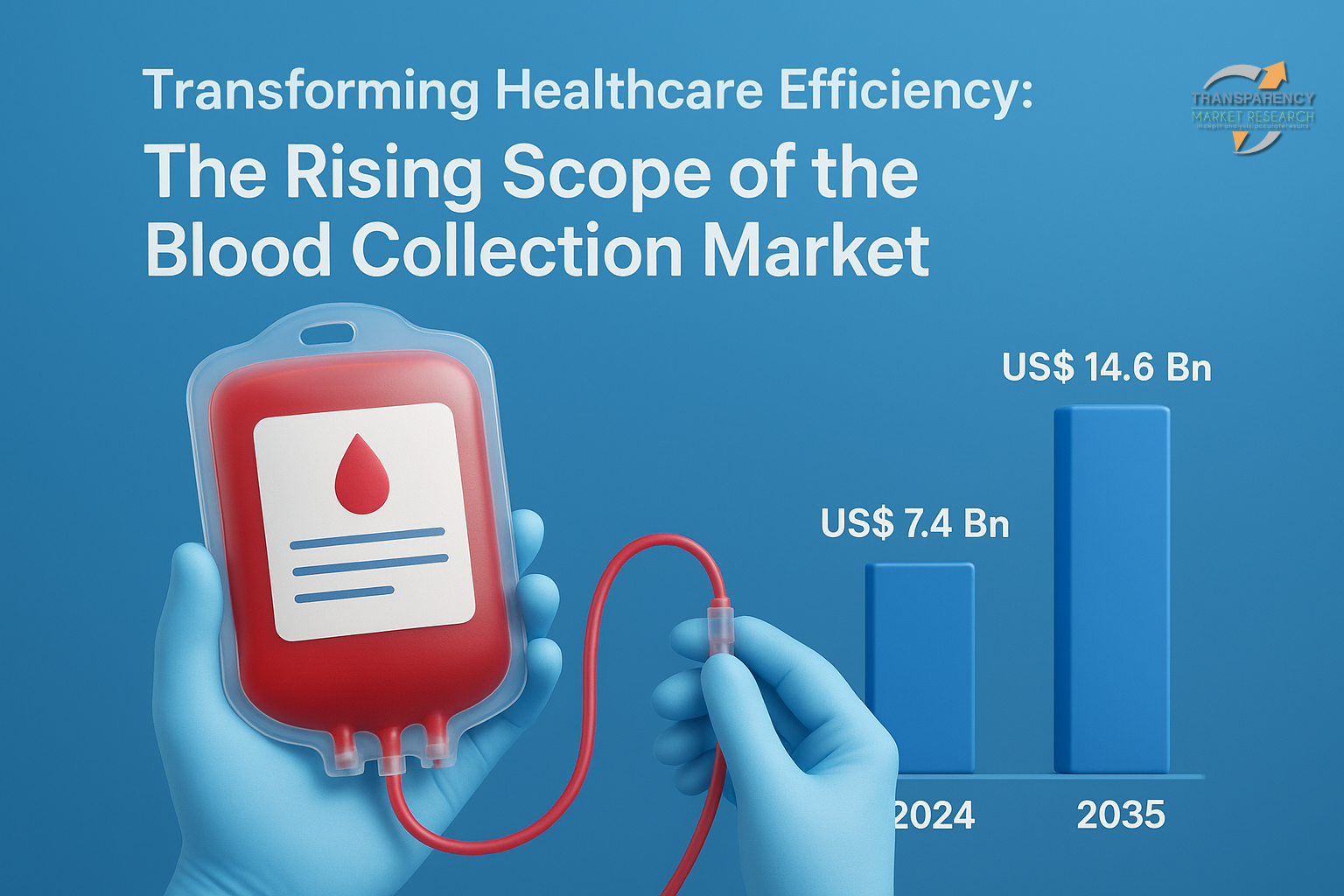
The global blood collection market was valued at US$ 7.4 Bn in 2024. The global blood collection industry is likely to increase at a CAGR of 6.4% over the forecast period, from 2025 to 2035, and reach US$ 14.6 Bn by the end of 2035.
Overview of Major Players in the Blood Collection Market
Key players operating in the global blood collection market are strategizing to foster innovation, technological advancements, and the creation of alliances/joint ventures while their objectives revolve around facilitating accuracy in testing, expanding product portfolios, and acquiring strong market positions to be ahead in the changing healthcare dynamics.
Some of the leading players in the global blood collection market include Abbott Laboratories, Becton, Dickinson and Company, Terumo Corp., Medtronic Plc, Qiagen, FL Medical s.r.l., Greiner Holding AG, Haemonetics Corp., Sarstedt AG & Co., ICU Medical, Inc., CML Biotech, SB-KAWASUMI LABORATORIES, INC., and Mitra Industries Private Limited.
Technology and Innovation Driving Change
Modern blood collection does not stop at simple needles and vials. The automated and digital collection systems that are entering the market are making the workflow seamless and traceable. Smart blood collection devices now boast of digital labeling, barcode tracking, and integration of data for improved safety with reduced sample mix-ups. These are indeed useful in large hospitals and research institutions dealing with thousands of samples every day.
In addition, capillary blood collection devices have also seen remarkable growth in recent times for both pediatric and home-based testing. Due to telemedicine and decentralized diagnostics, there is a growing demand among patients for convenient at-home testing. This trend has opened up new frontiers for blood collection system manufacturing firms to develop user-friendly, portable systems. Comfort, safety, and digital integration-the leading parameters that define the latest standard of care.
Increasing demand across healthcare and research
These blood collection products find application well beyond clinical diagnostics. Research laboratories, biopharmaceuticals, and academic institutes use good-quality blood samples in drug development studies, biomarker studies, and vaccine research. The COVID-19 pandemic further emphasized the need for efficient and hygienic blood collection practices, as millions of samples were analyzed to study immunity, infection spread, and vaccine efficacy.
Also, blood collection and transfusion services are on the rise across emerging economies around the world. Governments and NGOs are implementing awareness programs that encourage voluntary blood donations. This has raised the demand for affordable and user-friendly blood bags, needles, and collection sets that are sterile. Stronger healthcare infrastructure in Asia Pacific, Latin America, and the Middle East is expected to drive growth in these regions for the blood collection industry.
Sustainability and safety at the forefront
As environmental awareness increases, sustainability is nowadays also a key consideration in medical manufacturing. Companies are using eco-friendly materials and recyclable plastics in their blood collection products to minimize medical waste. Besides, infection control is at the forefront of healthcare like never before. Single-use and closed-system blood collection devices are also being emphasized in post-pandemic healthcare systems as ways of avoiding cross-contamination and ensuring patient safety.
Leading manufacturers are also working on collection systems that will be ergonomically designed to improve the experience for the healthcare professional. Innovations such as better grip and handling to precise vacuum pressure control are creating a safer and more efficient working environment for medical staff. The integration of AI and IoT-based monitoring in large healthcare settings enhances sample tracking and ensures transparency across the entire collection process.
Future Outlook: Precision, Automation, and Global Access
The future of the blood collection market lies in a blend of automation, digitization, and patient-centric design. With diagnostic accuracy emerging as a core element of personalized medicine, demand for high-quality blood collection systems continues to surge. Micro-collection technology, smart syringes, and connected diagnostic platforms are among those poised to change the way healthcare professionals will collect and manage samples in innovative ways.
At the same time, global efforts toward enhancing access to healthcare in developing countries will create new avenues of growth. Strategic collaborations between public health agencies and private manufacturers are likely to increase blood testing and donation capacities worldwide. With strong technological backing, coupled with growing healthcare investments, the blood collection market is on an transformative journey—improving diagnostics and, importantly, the quality of global healthcare delivery.