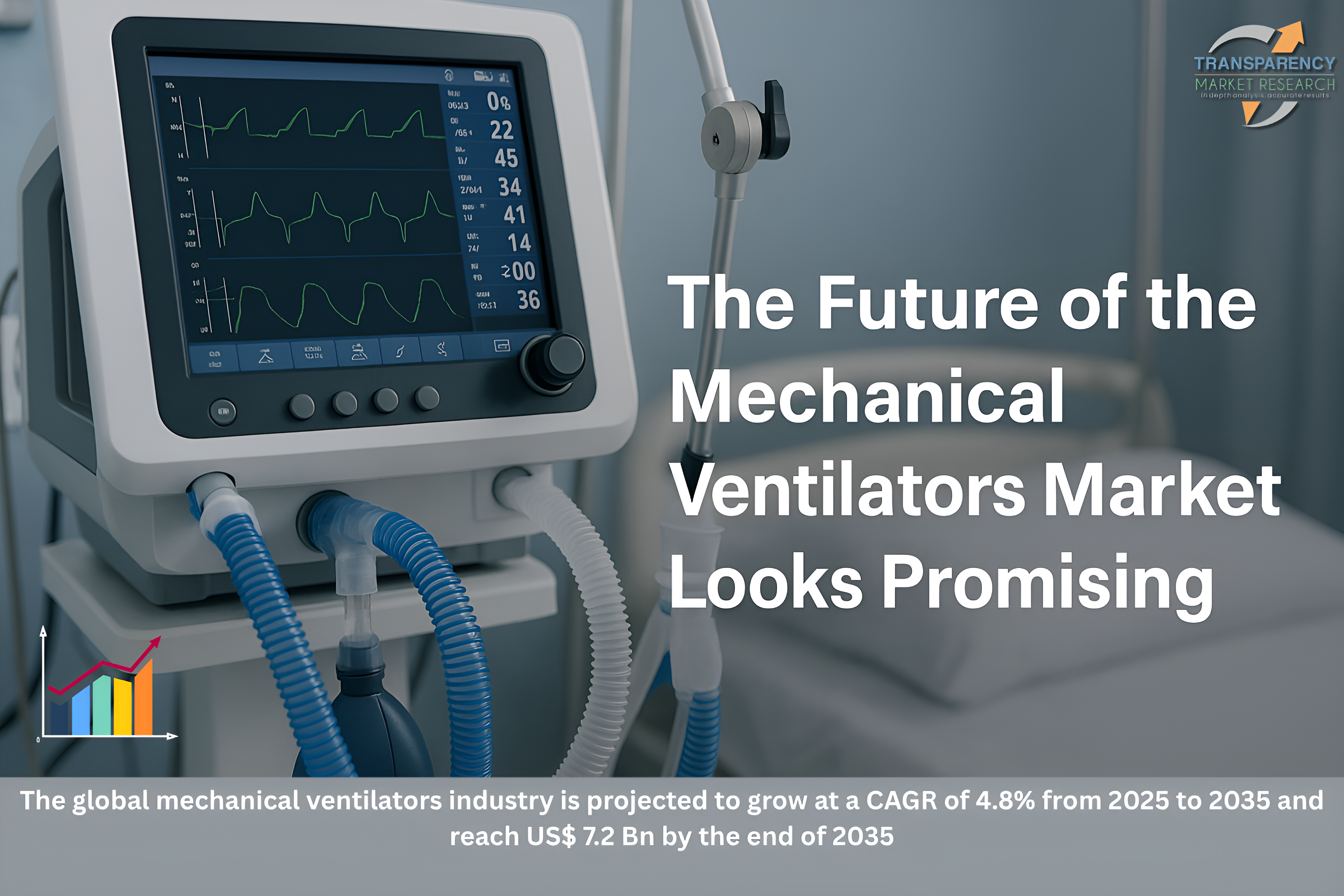
Chronic respiratory diseases such as COPD, asthma, and ARDS are on the rise. Pile this on top of growing numbers of procedures that require post-op ventilation, combined with an aging patient population at risk for respiratory complications, and it’s easy to see demand rising.
Market for Mechanical ventilators are no longer giant, single-purpose machines. New-generation ventilators are miniature, AI-powered, portable, and feature real-time monitoring. Hospitals, ambulances, and even home-care units now employ a range of ventilators for a variety of clinical conditions.
These advancements are remaking the way ventilators are made, promoted, and launched internationally.
A competitive market is inspired by innovation
With the increasing demand from intelligent, safe and more responsible ventilators, the players in the industry are increasing R&D expenditure and smearing a strategic alliance. Why? To stay in front and in front of sports in a rapidly changing health market.
Global Mechanical fan are some of the prominent innovation players in the market:
- Narang Medical Limited
- Hamilton Medical
- Tab. Industry
- NocCarc Robotics Private Limited
- Philips
- Fisher and Pacle Healthcare
- dragging
- Medtronic
- Ge Healthcare
- TELEGEE
- less
- Vaarreer Medical, Inc.
- Res with ink.
- Shiller
Each of these companies has something to bring to the table—product innovation, international reach, or respiratory device know-how.
These players have been described in comprehensive market research reports based on their company profile, financials, product portfolio, strategies, and recent developments.
Major Developments That Are Shaping the Future
The past twelve months have been phenomenal in product innovation and strategic expansion. Let us look at a couple of headline-making plays:
✅ Ge Healthcare Assurance on Evair Compressors (October 2024)
GE Healthcare conducted a final test of his Evier compressor and found the discharge of formaldehydics -proof for the target patient population. Because of this, the safety relationship rules that were published previously were withdrawn. Not only did these doctors and hospitals insured, but it was according to GE’s openness and product safety.
✅ Less strategic extension in cardiovascular units (January 2024)
China’s Shenzhen Less Bio-Medical Electronics raised their eyebrows with an investment of 6.65 billion yuan (~ 927 million dollars) on a large scale to get a majority share in Apt-medicine. The acquisition represents the infection of less to expand the footprint beyond the fan in the heart -material technology, a supplement, high -development healthcare.
This type of strategic alignment indicates the extent to which the market diversifies for mechanical fan, and the merger of respiratory care with other details on significant care.
The Movement Towards Portability and Intelligent Technology
There is a definite shift towards smart and portable ventilators with continuous patient monitoring and auto-adjustment based on real-time feedback. Ventilators that incorporate artificial intelligence to provide personalized airflow settings, track patient feedback, and alert caregivers in emergency situations are the new standard.
This innovation is especially important in external or resource -poor settings where access to trained staff or special hospitals is inaccessible. Transportable fan can prove to be a game change during military operations, disaster help and home nursing for elderly patients.
Challenges on the horizon
Although the trend is positive, the mechanical fan market also has some challenges.
The cost of equipment, maintenance cost, and the absence of skilled professionals in developing countries can be hindrance.
In addition, regulatory oversight is strictly enforced on life-sustaining devices. Ventilator manufacturers have stringent standards of safety and quality in every country where they operate. This is both a challenge and an opportunity—especially for those manufacturers that prioritize compliance and innovation equally.
A Breath of Opportunity Ahead
The mechanical ventilator market is no longer the headline news story in the media the way it was during the height of the pandemic, but it is part of life-saving critical care infrastructure globally.
As the technology is changing and new health care is developed, mechanical fan will be more advanced, patient -focused and financially. Companies that are adaptable, invest in R&D and focus on changing the requirements for global health services, this market is likely to succeed.
Final Reflections
The figures—US$ 4.3 billion in 2024 to US$ 7.2 billion in 2035—are only half the story. Behind them are thousands of lives, hospital beds better used, and respiratory experts with the tools they require.
Mechanical ventilators are not simply machines. They are life support systems that are products of engineering, medicine, and humankind.
And in the coming years, this market will not just grow—it will change, transform, and be the leader in redefining respiratory care around the world.