In the last few years, the regenerative medicine industry has experienced great innovation—and the most promising point of growth is the Platelet-rich Plasma (PRP) industry. For rehabilitation of sports injuries, hair restoration, or joint repair, PRP is now the norm in a variety of medical specialties. As minimally invasive, autologous therapies are used more and more around the world and clinical evidence of PRP’s success continues to build, the industry on a global scale is poised for explosive growth.
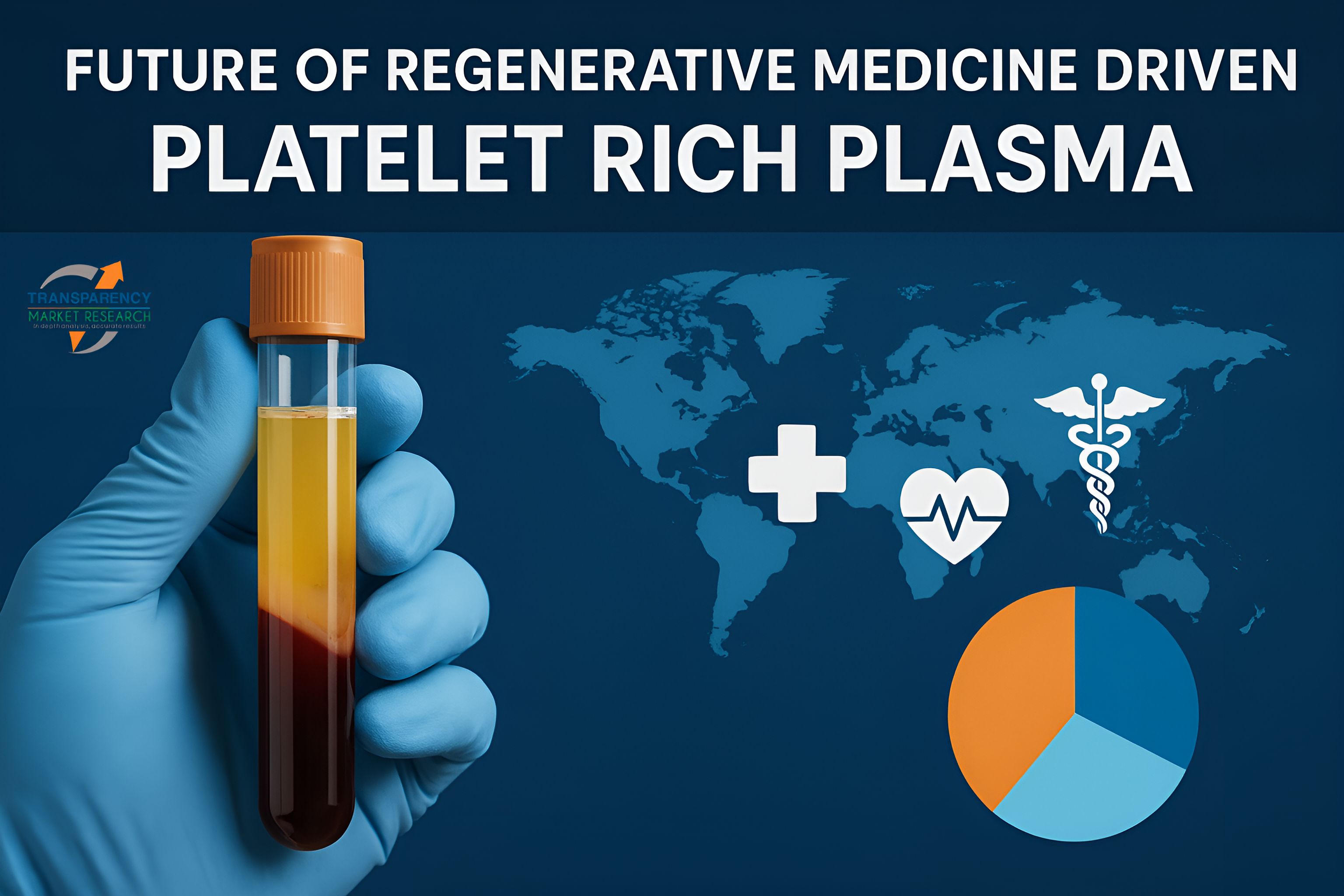
According to market estimates, the world platelet-rich plasma market, which is worth approximately US$ 847.6 million in 2024, is expected to exceed US$ 2.3 billion by 2035. That’s a 9.6% compound annual growth rate (CAGR) between 2025 and 2035—a phenomenal growth profile that reflects market belief as much as medical potential.
What’s driving this explosive growth? Take a look at the forces behind this fast-growing industry.
The Allure of Platelet-rich Plasma: Why It’s Conquering
PRP therapy is a treatment of harvesting and concentrating platelets from the patient’s own blood. Platelets contain growth factors that stimulate the healing of the tissue and reduce inflammation. The treatment is commonly used in orthopedics, dermatology, and dentistry, as well as in cosmetic treatments such as facial rejuvenation.
One of the strongest arguments for PRP application is that it is autologous in origin—i.e., derived from the patient’s own body. This drastically reduces the risk of allergic or infectious reaction. As more patients and practitioners seek alternatives to medication or synthetic options, PRP is a natural and effective solution.
Varied Applications Across Specialties
The adaptability of PRP is perhaps its greatest asset. In orthopedics, it is used to treat ligament sprains, osteoarthritis, and tendonitis. In cosmetic medicine, it is prized for its ability to regenerate collagen and revitalize the skin. PRP is also being used with greater frequency in dentistry, wound repair, and even urology.
Hair restoration is also one field where the growth is extremely strong. Clinics all over the world now offer PRP injections to stimulate dormant hair follicles and address early-stage baldness, particularly androgenetic alopecia. The rising rate of aesthetic consciousness, mainly among the young, has only boosted the trend.
Technological Progress and Standardization
One of the largest problems in the PRP field has been the lack of standardization in preparation methods. Different machines and clinics will give different platelet concentrations, and the outcomes are thus unreliable. This is one area where the industry is lagging behind.
Major players in the market have identified this barrier and are investing heavily in R&D for standardizing and optimizing PRP preparation protocols. Improved centrifugation methods, improved closed-loop systems, and automated equipment are assisting in the provision of a reproducible, high-quality product with reduced preparation time.
Take, for instance, the development of one-spin PRP machines—machines requiring only a single spin step and which can produce quality PRP in a shorter timeframe. Besides improving clinic workflow, these improve patient experience through minimized wait time and discomfort.
Strategic Moves by Market Leaders
Few of the key players that are dominating the global market for PRP are Johnson & Johnson Services, Inc., Stryker, Zimmer Biomet, Arthrex, Inc., Terumo BCT, Inc., Crown Aesthetics, Celling Biosciences, and EmCyte Corporation. These companies are continuously innovating, making partnerships, and acquiring technologies, which keep them competitive.
For example, in December 2024, Illuminate announced U.S. FDA clearance of a new single-spin PRP device—designed to simplify the process for achieving high-quality platelet-rich plasma. The system has a high-speed, efficient preparation mechanism with improved platelet capture rates, an easier, more streamlined solution for clinicians to optimize the healing process and improve regenerative outcomes.
Likewise, in June 2023, FDA cleared Dr. PRP USA LLC’s PRP kits for 510(k). The kits are now more universally accepted in clinical settings and facilitate regulatory compliance, which in turn enhances confidence among patients and healthcare providers.
Patient Awareness and Demand on the Rise
Growing volumes of clinical evidence and patient testimonials have brought PRP into the spotlight on medical and mainstream media outlets. Social media personalities, professional sports figures, and Hollywood celebrities have all publicly stated their favorable results with PRP, creating growing interest and demand.
They’re better educated and taking a more active role in their own care now. They’re investigating alternatives, comparing results, and in many instances, deciding to have procedures that have faster recovery and fewer side effects. PRP does all of the above, so it’s highly appealing for prevention and for the treatment of chronic disease.
Difficulties On The Road Ahead
Though it is advantageous, the PRP business has its drawbacks. Lack of consistency in the treatment efficacy due to differences in preparation methods, low reimbursement, and the lack of clinical algorithms with standardization are major hindrances.
In addition, while some treatments of PRP are FDA-approved (e.g., devices and kits), the majority of its clinical uses are off-label. Such regulatory ambiguity can affect market adoption, especially from more traditional healthcare systems or doctors.
But, sustained investment in clinical trials, in combination with increasing pressure for more transparent regulatory guidelines, will most probably overcome such hurdles in the long run.
Looking Towards 2035
The future of the platelet-rich plasma industry is definitely bright. With the evolving technology and widespread uses, PRP is sure to be the standard in therapy and cosmetic treatment.
By 2035, PRP systems would be integrated into multi-functional platforms that would be able to integrate diagnostics, preparation, and even AI-based treatment protocols seamlessly. Wearable devices would be tracking patient response in real-time and would enable a personalized and adaptive treatment approach.
Healthcare professionals will have the ability to deliver PRP therapy with enhanced precision, data backup, and quality control requirements. This will streamline insurance reimbursement and clinicians’ protocol development based on evidence.
Final Remarks
The PRP market isn’t expanding—it’s changing. With its capacity to tap into the body’s own healing potential, PRP is revolutionizing the way we recover, restore, and practice regenerative healthcare. As technology presses on with efficiency and clinical results, and as education for providers and patients grows, PRP will be a staple of 21st-century healthcare.
From sports fields to spas, and orthopedic clinics to dental offices, PRP’s journey is just beginning—and the future is full of promising potential for science, medicine, and millions of patients worldwide.

![Positron Emission Tomography [PET] Scanners Market (Product Type: Full Ring PET Scanners, and Partial Ring PET Scanners; Modality: Standalone PET Scanners, PET/CT Scanners and PET/MRI Scanners; Application (Oncology, Cardiology, Neurology, and Others) – Global Industry Analysis, Size, Share, Growth, Trends, and Forecast, 2025-2035](https://tmrblog.com/wp-content/uploads/2025/10/CAGR-of-3.2-from-2025-to-2035.png)