Battery technologies for aviation and marine are undergoing significant innovation to support electrification and reduced emission. While, lithium-ion is the dominant technology in these industries; lower energy density, higher weight, and safety issues are still are key challenges that are driving research towards newer chemistries such as solid state, lithium-sulphur, and metal-air batteries.
In aviation, the proper battery technology involves a compromise of lightweight construction, enhanced safety, and high energy density. For the marine market, long cycle life and bulk storage for electric and hybrid ships are emphasized, where lithium iron phosphate (LFP) batteries are popularly applied.
Innovation in Battery Chemistries to Meet Decarbonization Goal and Cost Challenges
The global aviation and marine batteries market was valued at US$ 693.3 Million in 2024 and is expected to register a CAGR of 4.2% during 2025-2035 to reach 1089.8 Million by 2035. Currently marine accounts for more than 70% of the market and rest is contributed by electric aviation batteries. Stringent emissions regulations such as IMO 2050 for shipping and CORSIA for aviation—are driving battery uptake to lower carbon emissions. The airline and shipping industries also are looking into electric and hybrid powertrains to lower operational expenses with increasing fuel costs.
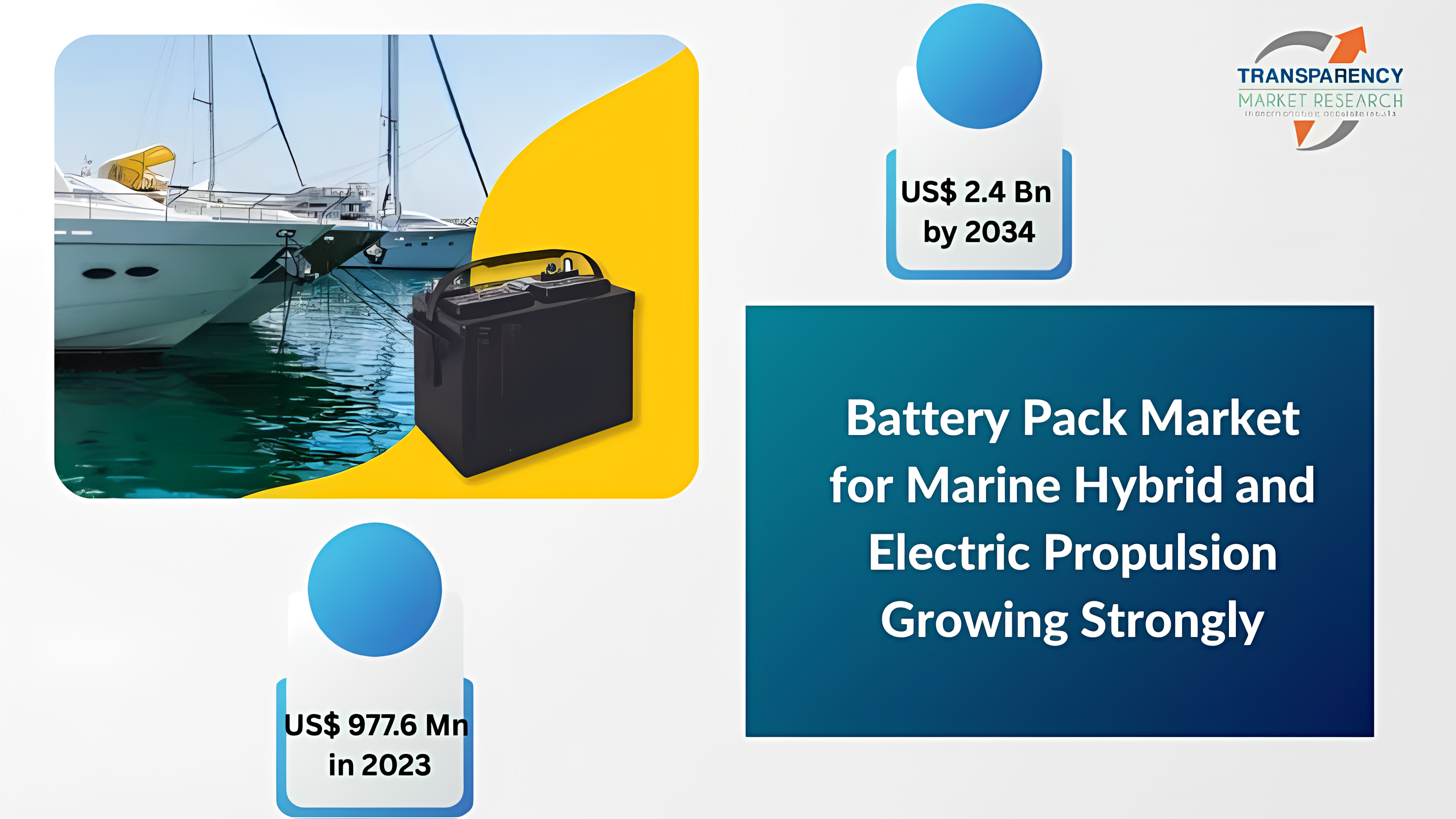
The Battery Pack for Marine Hybrid & Full Electric Propulsion Market was valued at US$ 977.6 Million in 2023 and is projected to reach US$ 2.4 Billion by 2034, growing at a CAGR of 8.7%. This growth is driven by the global shift toward cleaner marine transportation, stricter emission regulations, and rising adoption of hybrid and fully electric vessels. Battery packs are becoming essential for efficient, sustainable marine propulsion systems.
Market Trends Driving the Innovation of Battery in Aviation and Marine
- Stringent emission regulation driving adoption of battery-based propulsion
- Increasing investment in aviation and marine battery innovation to meet sustainability goals
- Combination of battery with hydrogen fuel cell and alternative fuel
- Innovation in battery technologies to improve energy density and safety
How Battery Innovations Are Powering Sustainable Aviation and Shipping
- In February 2025, NASA introduced sulphur selenium solid-state battery with energy density of 500 Wh/kg which addresses critical challenges in energy storage, safety, and performance of electric aircraft. Its design helps in reducing the weight by 40% compared to traditional configurations. Fatser adoption of this technology is expected in advanced air mobility (AAM) and electric vertical takeoff and landing (eVTOL) systems
- In October 2024, SOLiTHOR designed next-generation Lithium metal solid-state batteries (SSBs) that meets critical demand from aviation and marine industries such as improved cycle life, energy density, among others. The company achieved 384 Wh/kg by pairing proprietary Gen-1 electrolyte with thin lithium metal and high-loading NMC cathodes
- In June 2024, maginX unveiled Samson battery series especially designed for aviation industry having advanced level of performance, safety, and reliability. The battery features highest energy density (300Wh/kg) in aviation industry, longer life cycle, and patented safety technology. They are also suitable for helicopters, eVTOLs. and marine craft
- In May 2023, BOLD Valuable Technology launched BOLDair aviation battery system that power electric or hybrid flight. This battery features 285 Wh/kg of energy density, thanks to integration of silicon-graphite anode technology
The Future of Electric Aviation and Marine Vessels with Battery Technology
Despite the technological advancements, batteries retain much less energy per unit of weight than fossil fuels, and thus are less suitable for long-haul flights and big ships. Lower energy density, and high weight are significant challenges to aviation since added weight will directly impact flying range and fuel efficiency. With shipping, gigantic batteries occupy gigantic space, into which cargo needs to be yielded. Lithium-ion batteries can also overheat and burn up, posing serious adoption barriers.
To tackle these challenges, next-generation battery chemistries are being explored:
Lithium-sulphur and metal-air batteries: Potential for reduced weight and greater energy density over traditional lithium-ion batteries.
Solid-state batteries: Provide more energy density, improved safety, and longer lifespan. Solid-state technology, as opposed to lithium-ion batteries, does not produce fire risks or liquid electrolyte spills.
Advances in battery technology will be key to defining the future of green shipping and electric flight, and could open the door to cleaner, greener, and more efficient transport.