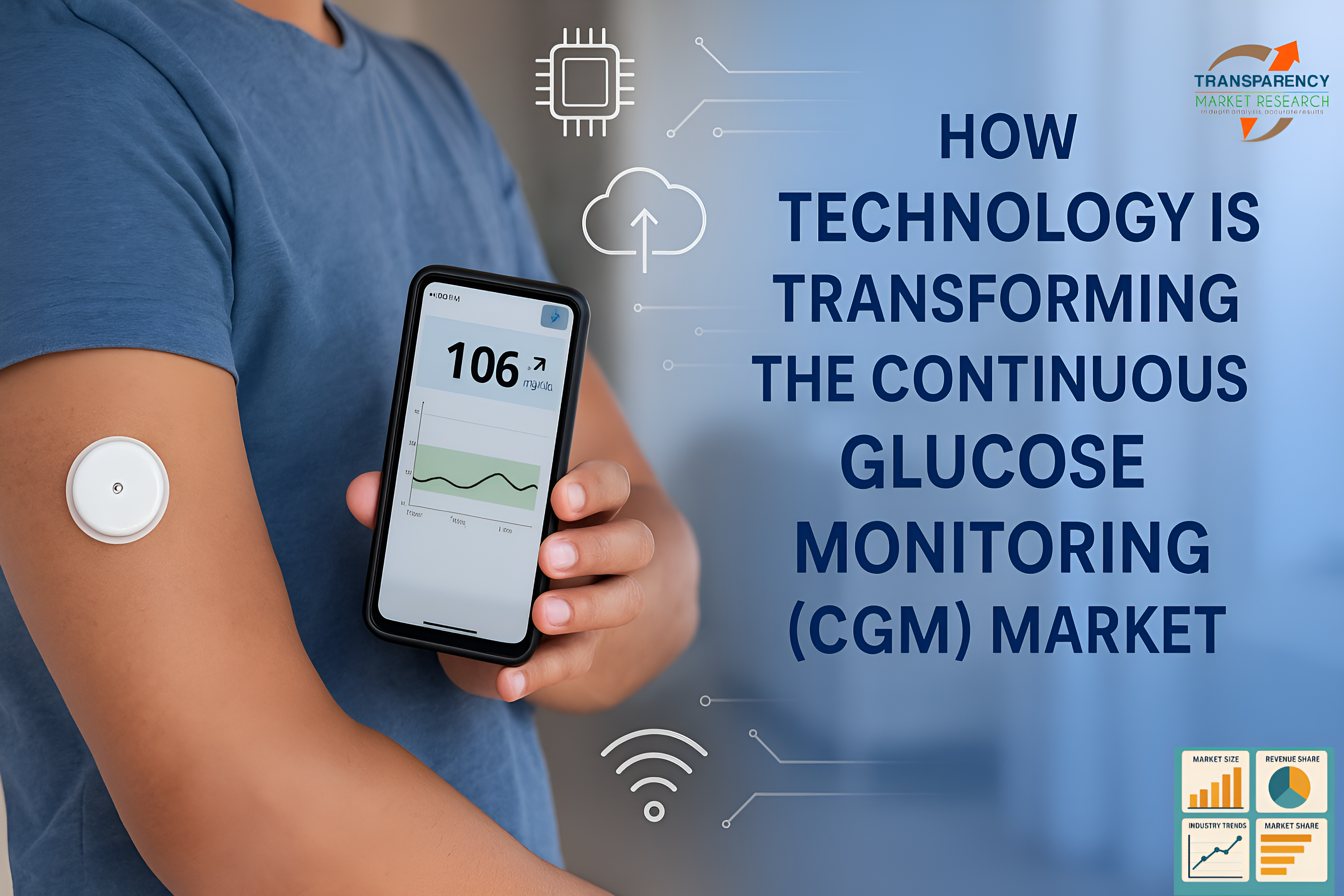
Management of diabetes previously entailed a great deal of finger pricking, food diaries, and monitoring, but technology has revolutionized all that, offering patients better real-time glucose monitoring. Perhaps one of the most groundbreaking solutions is Continuous Glucose Monitoring (CGM)—a market that has grown exponentially and is likely to grow and be embraced in the coming years.
Continuous glucose monitors are no longer wearable technology—they are freedom, peace of mind, and active health management for millions of patients with diabetes. Rates of diabetes on the increase, heightened awareness of real-time glucose monitoring, and technological advances have all converged to propel the growth of the CGM market.
What is Continuous Glucose Monitoring and Why Should I Care?
For those unaware of the term, CGM is a method of tracking glucose levels around the clock. It is a tiny, wearable sensor implanted just under the skin, typically on the arm or belly. The sensor measures glucose levels in interstitial fluid and transmits them to a monitor or smartphone app.
This real-time information allows users to see how their body responds to food, exercise, stress, and sleep—guiding more informed insulin dose, diet, and exercise decisions. For individuals with Type 1 diabetes and for most with Type 2 diabetes, CGM can be life-changing.
In contrast to older blood glucose meters that capture a snapshot, CGM provides a stream of continual data, alerting patients to highs and lows before they become life-threatening.
Continuous Glucose Monitoring Market Overview
The global Continuous Glucose Monitoring Market was valued at US$ 5.8 Billion in 2024. Owing to growing diabetic instances globally and growing reliance on digital health solutions, the market is anticipated to grow at a CAGR of 7.4% during the forecast period of 2025-2035. The market is anticipated to grow beyond US$ 12.6 Billion by 2035.
This incredible journey is not just a numbers game. It’s a reflection of the growing migration of consumers to wearable health technology, the need for better tools to cope with chronic disease, and the move to more individualized care.
What’s Driving the Growth?
Several factors are converging to fuel this market expansion:
- Increased Diabetes Incidence: The International Diabetes Federation reports that over 530 million people across the globe have diabetes, and the figure keeps rising. This increase directly drives demand for effective monitoring devices like CGM systems.
- Innovation in Technology: Technology is becoming smaller, smarter, and more convenient. Sensors also have better adhesive materials, longer wear time, water-proofing, and smartphone connectivity.
- Better Reimbursement Policies: Insurers in the majority of countries are now offering better coverage for CGM systems, removing a major cost barrier for patients.
- Remote Patient Monitoring: With the revolution of telehealth and remote care post-COVID-19, CGMs are at the forefront of virtual diabetes management programs.
An Examination of the Industry Leaders
Dexcom, Inc., Abbott, Medtronic, Ypsomed AG, and Senseonics Holdings, Inc. are some of the industry leaders that are propelling the global CGM market. These players are not just investing in R&D—they’re also collaborating closely with regulatory authorities to ensure efficacy and safety.
In fact, many players are seeking regulatory permits to foray into the global markets with the newest generation offerings. For instance:
Analysis of Major Players in Continuous Glucose Monitoring Market
Major companies are seeking regulatory approval for the new stent technologies. The companies are seeking their products’ approval from major regulatory authorities such as the FDA and EMA so that their stents can be tested for safety and efficacy.
A few of the most important players include A. Menarini Diagnostics, Signos, Inc., F. Hoffmann-La Roche Ltd, Nemaura, Bionime Corporation, and Intelligo BV. These have been profiled based on business strategy, finance, and recent development and give a general overview of the competition.
Key Developments Impacting the Market:
Innovation is relentless in the space of CGM. We have witnessed numerous market-changing product launches and approvals alone in the last year:
- Dexcom ONE+ Release (Feb 2025)
DexCom, Inc. introduced Dexcom ONE+ in Spain, Belgium, and Poland. The user-programmable CGM includes a sensor, a transmitter, and a smartphone-compatible app. Surprisingly, the sensor is water-resistant and usable in three body locations, offering more comfort and convenience.
- Medtronic MiniMed 780G with Simplera Sync (Jan 2024)
Medtronic’s MiniMed system, which is technologically advanced, received CE Mark clearance in Europe. The new Simplera Sync sensor, which is compact compared to the earlier sensor, enhances the user experience as it features a two-step insertion process. The roll-out strategy in Europe will significantly strengthen Medtronic’s position in the CGM ecosystem.
These breakthroughs aren’t technological—they’re human. They mean fewer painful shots, fewer scary nighttime lows, and more diabetes control in life.
The Future of CGM: Where Are We Going?
In the near future, the CGM market will evolve in a number of interesting ways:
- AI & Predictive Analytics Integration: Glucose patterns can be forecasted using real-time data and AI, and tailored insights can be given, which makes CGMs proactive instead of reactive.
- Non-invasive Sensors: Some of the research work is being done on developing non-invasive CGM devices which would not break the skin. Although in development stages, these are going to revolutionize the industry.
- Greater Interoperability: Future CGMs will be more integrated with insulin pumps, exercise apps, and electronic health records (EHRs), allowing for smooth sharing of information between patients and healthcare professionals.
- Growing Population Adoption: As awareness and affordability grow, CGMs will increasingly be used not just by Type 1 diabetics but also by growing numbers of Type 2 diabetics, especially those on insulin therapy or those with high glucose variability.
Human Impact: Beyond Being a Medical Device
With every CGM is a story of people—a mother monitoring her child’s blood sugar at school, a teenager with Type 1 diabetes trying to navigate adolescence, an older person living with their disease.
The impact of these devices cannot be overstated. They improve the quality of life, enable better clinical decision-making, and reduce long-term complications. Ultimately, they give patients and families something they typically lose with a chronic illness: control.
Closing Remarks
Continuous glucose monitoring isn’t only an expanding market—it’s a ray of hope for the millions of people who live with diabetes. As health care becomes more individualized and technology more advanced, CGMs will be standard of care and not an exception.
With a market set to grow to over US$ 12.6 Billion by 2035, and innovation picking up pace, the future looks bright not just for the organizations leading the revolution—but for all those who benefit from each item of information, each warning, and each moment of enhanced well-being.


