The past ten years have seen a sea change in how we think about respiratory health. From global pandemics that placed the worth of lung health in stark relief to increased concern about chronic respiratory disease like asthma and COPD, conversation about breathing—and monitoring it—has never been more urgent.
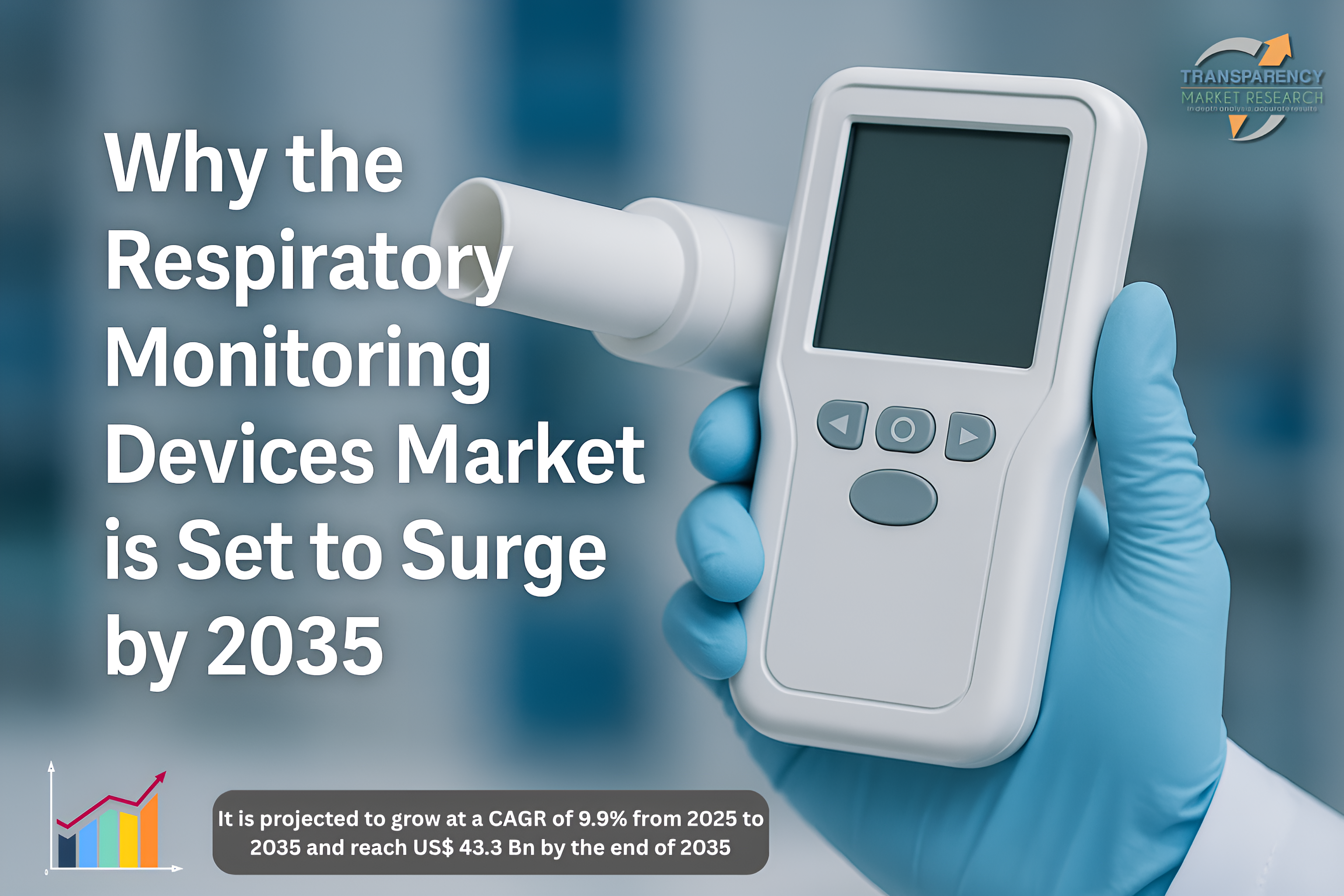
That growing awareness is falling squarely on the world Respiratory Monitoring Devices Market, whose value was US$ 15.4 billion in 2024. And this is just the beginning. According to market estimates, the industry is expected to grow at 9.9% CAGR between 2025-2035 and reach a staggering US$ 43.3 billion by 2035.
So, why is demand growing? What is the role of respiratory monitoring devices in today’s healthcare practice? And which technologies are revolutionizing the industry of the future? Breathe in and let’s get started.
What are Respiratory Monitoring Devices?
Respiratory monitoring equipment is employed to monitor an individual’s lung function, breathing, and oxygen saturation. These machines play an important role in diagnosing, managing, and monitoring respiratory illness—primarily chronic disease like:
- Asthma
- Chronic Obstructive Pulmonary Disease (COPD)
- Sleep apnea
- Pulmonary fibrosis
- Post-COVID complications and COVID-19
Some of the common respiratory monitoring equipment include:
- Spirometers – measure lung volume and flow
- Pulse oximeters – report oxygen in the blood
- Capnographs – measure CO₂ during breathing
- Peak flow meters – check how well air is blowing out of the lungs
- Respiratory rate monitors – utilized in hospital and home care settings
These devices can be found in ICUs, emergency rooms, outpatient clinics, as well as in homes, thus being highly flexible in the healthcare industry.
Why Is the Market Growing So Quickly?
1. Rise in Chronic Respiratory Diseases
More than 300 million individuals worldwide have asthma, and more than 250 million have COPD, according to the World Health Organization. These figures are projected to rise due to aging populations, increased air pollution, and tobacco smoking, especially in the developing world.
As there are more patients requiring ongoing monitoring, the demand for simple-to-use and precise devices is increasing.
2. Post-Pandemic Preparedness
COVID-19 was a harsh reminder of just how important respiratory well-being is. Hospitals across the globe were racing for ventilators and oxygen monitoring equipment. Today, governments and healthcare workers are investing in readiness, and respiratory monitoring is a major component of that.
Even after acute illness, most COVID-19 patients require ongoing observation of the lungs, which means chronic stress on these devices.
3. Technological Advances
More advanced devices shrink, become smarter, and more connected. Cloud-connected wearable oximeters and spirometers can send real-time data to physicians, enabling RPM, a trend that exploded during the pandemic and still is not slowing down.
Integration of AI is also transforming practice, with smart algorithms helping to interpret breathing patterns, detect early warning signs of deterioration, and personalize treatment plans.
4. Home Healthcare Boom
Aging populations and patient preference are driving a shift towards care at home. Chronically respiratory patients are increasingly managing their condition in the home environment using digital solutions, supported by remote monitoring from healthcare professionals.
This change is not only convenient—it’s cost-effective and is likely to result in better patient outcomes.
Focus on Preventive Healthcare
The new healthcare paradigm is shifting more and more toward preventive rather than reactive medicine. Regular respiratory monitoring, especially in high-risk populations like the elderly, smokers, and those with occupational exposure (e.g., factory workers and miners), is a preventive strategy to identify issues early and reduce hospitalization rates.
Innovation Spotlight: Smarter Devices for Smarter Care
The market for respiratory monitoring devices is not growing—it’s changing. Look at some trends to watch out for:
- Respiratory health wearables: Picture smartwatches equipped with an integrated pulse oximeter, or chest straps measuring breathing rates in real time.
- Remote diagnostics: Devices that synchronize with mobile apps and allow physicians to remotely monitor lung function.
- Artificial Intelligence: AI is used to interpret spirometry test results and detect early warnings of worsening or progression of disease.
- Portable & wireless devices: Allowing patients to track lung health remotely, without the need for bulky equipment or frequent visits.
These breakthroughs are transforming respiratory therapy into an around-the-clock, personalized health experience from a sporadic hospital visit.
Who’s Driving the Demand?
Clinics and Hospitals
Critical care, pulmonology, and emergency departments are the major purchasers of respiratory monitoring technology. As ICU beds are a worldwide commodity, precise monitoring machines are useful at triage and ongoing care.
⚕️ Home Healthcare Providers
Home healthcare and rehabilitation organizations are relying on easy-to-use, transportable respiratory devices that help monitor patient health between visits.
Employers & Occupational Health
Dust, fume, or other impurity-exposed manufacturing facilities are using these machines to track worker lung function in the long term. Early detection reduces liability and improves worker safety.
Government Health Programs
Public health campaigns—particularly in the developing world—are more and more providing funding for respiratory health programs in light of increased pollution, urbanization, and smoking.
Global Market Dynamics
North America
A technologically advanced and developed market, North America is the leader in the adoption of intelligent respiratory devices based on a high percentage of elderly population and a strong reimbursement environment.
Europe
With an extremely advanced healthcare infrastructure and a high emphasis on preventive medicine, European nations are heavily investing in hospital and home-based respiratory monitoring systems.
Asia-Pacific
This market is experiencing most of its growth, fueled by rising awareness, rising healthcare expenditure, and rising rates of respiratory disease caused by smoking and pollution. India and China are experiencing particularly dramatic rises in demand.
What’s Next for the Industry?
As we approach 2035, expect respiratory monitoring devices to be more integrated, accessible, and intelligent. With a size of US$ 43.3 billion, the market is brimming with opportunities for investment, innovation, and impact.
Note the following:
- More consumer-focused products for lung health and fitness
- Integration with telehealth platforms
- More application of predictive analytics to predict health problems
- Sustained focus on affordability in developing markets
The future of respiratory therapy is networked, knowledge-driven, and patient-focused. And it’s coming sooner than most expected.
Last Thoughts: Bringing Life to the Healthcare Future
Our capacity to breathe is taken for granted—until it’s interrupted. That’s why respiratory monitoring devices are no longer a niche area of healthcare; they’re part of the fabric of how we manage modern health challenges.
Because more and more of us are aging—and sick for longer—lung health surveillance will be the key to improved quality of life, saving healthcare dollars, and getting ready for the next global health emergency.
So whether you’re a tech innovator, a patient, or a provider, the message is the same: it’s time to put respiratory health in the spotlight.