The global skin care market has evolved into one of the most dynamic and influential segments of the beauty and personal care industry. Driven by changing consumer lifestyles, rising awareness of skin health, and continuous innovation, skin care has moved far beyond basic cleansing and moisturizing. Today, it represents a sophisticated blend of science, wellness, sustainability, and self-expression, shaping how consumers across the world approach beauty and personal care.
Market Overview and Growth Dynamics
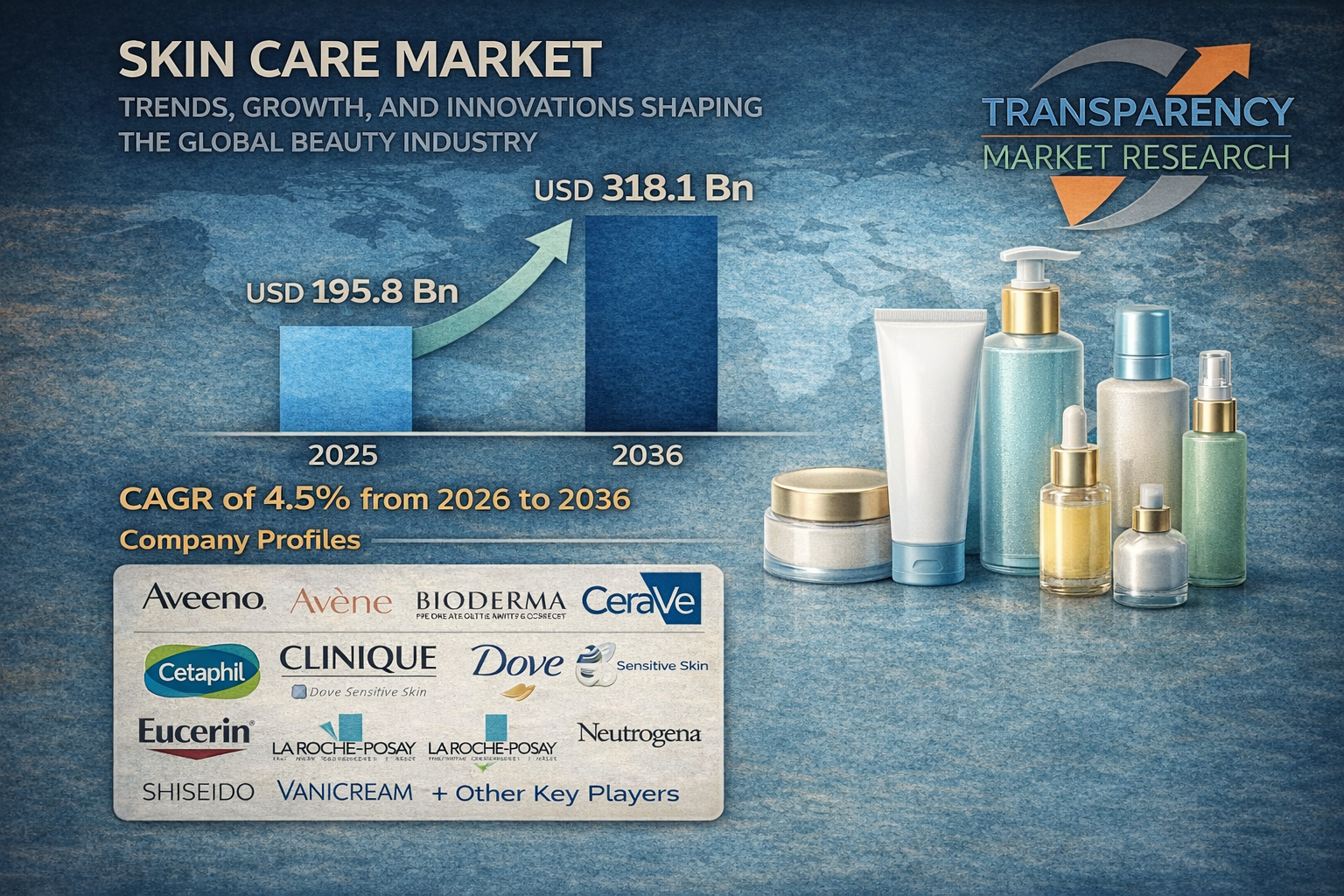
The global skin care market was valued at USD 195.8 billion in 2025 and is projected to reach USD 318.1 billion by 2036, expanding at a CAGR of 4.5% from 2026 to 2036. Market growth is primarily driven by rising awareness of skin health, increasing prevalence of skin-related conditions, and evolving consumer expectations, including growing demand for personalized and targeted skincare solutions.
Emerging economies in the Asia-Pacific, Latin America, and the Middle East are playing a major role in market expansion. Rapid urban growth, rising beauty consciousness, and greater access to global brands through e-commerce platforms are accelerating demand. Meanwhile, mature markets in North America and Europe continue to drive premium and science-backed skin care innovations.
Key Trends Transforming the Skin Care Industry
One of the most influential trends shaping the skin care market is the growing preference for natural, organic, and clean-label products. Consumers are becoming increasingly cautious about ingredient safety, favouring formulations free from parabens, sulfates, artificial fragrances, and harsh chemicals. Plant-based extracts, botanical actives, and sustainably sourced ingredients are now central to product development strategies.
Personalization is another defining trend. Advances in data analytics, artificial intelligence, and dermatological research have enabled brands to offer customized skin care solutions based on skin type, concerns, climate, and lifestyle. Personalized serums, regimen-based kits, and AI-powered skin analysis tools are gaining strong traction, particularly among digitally savvy consumers.
The rise of “skinimalism” is also influencing purchasing behavior. Instead of multi-step routines, many consumers are opting for simplified regimens with multifunctional products that deliver hydration, protection, and treatment in one formula. This trend reflects a broader shift toward convenience, efficiency, and mindful consumption.
Innovations Driving Product Development
Innovation remains at the core of the skin care market’s evolution. Scientific advancements in dermatology and cosmetic chemistry have led to the development of high-performance active ingredients such as peptides, ceramides, hyaluronic acid, retinoids, and probiotics. These ingredients are backed by clinical research and are designed to address specific skin concerns at a cellular level.
Biotechnology is playing an increasingly important role in skin care innovation. Lab-grown ingredients, bio-fermentation processes, and microbiome-focused formulations are opening new possibilities for efficacy and sustainability. Products designed to support the skin’s natural barrier and microbiome balance are gaining popularity, especially among consumers with sensitive or problem-prone skin.
Another major area of innovation is sun care and skin protection. With growing awareness of photoaging and environmental damage, brands are introducing advanced sunscreens and anti-pollution skin care products that protect against UV radiation, blue light, and urban pollutants.
The Influence of Digitalization and E-Commerce
Digital transformation has significantly reshaped how skin care products are marketed, sold, and consumed. Social media platforms, beauty influencers, and online communities play a powerful role in shaping consumer preferences and trends. Educational content, product reviews, and dermatology-backed advice shared online have increased transparency and empowered consumers to make informed choices.
E-commerce has become a vital growth channel for the skin care market. Online platforms offer consumers access to a wider range of products, global brands, and subscription-based services. Direct-to-consumer models allow brands to build stronger relationships with customers, collect valuable data, and rapidly respond to changing demands.
Virtual try-ons, augmented reality tools, and online skin consultations are further enhancing the digital shopping experience, bridging the gap between physical and online retail.
Sustainability and Ethical Beauty
Sustainability has become a central focus in the global skin care industry. Consumers are increasingly demanding eco-friendly packaging, cruelty-free testing, and ethically sourced ingredients. In response, brands are investing in recyclable materials, refillable packaging systems, and reduced plastic usage.
Water conservation, carbon footprint reduction, and transparent supply chains are also gaining importance. Companies that align their values with environmental and social responsibility are building stronger brand loyalty and long-term consumer trust.
Challenges Facing the Market
Despite its strong growth trajectory, the skin care market faces several challenges. Intense competition, rapid product launches, and short trend cycles can make brand differentiation difficult. Regulatory compliance across different regions adds complexity, particularly as governments tighten safety and labeling requirements.
Additionally, misinformation and unrealistic beauty standards promoted online can create skepticism among consumers. Brands must balance marketing appeal with authenticity, education, and scientific credibility to maintain trust.
Future Outlook
The future of the skin care market is expected to be shaped by deeper integration of science, technology, and wellness. Personalized, preventative, and holistic skin care solutions will continue to gain prominence. Innovations in biotechnology, AI-driven diagnostics, and sustainable manufacturing will further redefine product development.
As consumers increasingly view skin care as an essential part of overall health and well-being, the market will continue to expand across demographics and regions. In this evolving landscape, brands that prioritize efficacy, transparency, and sustainability will be best positioned to succeed in shaping the next generation of the global beauty industry.
Final Thoughts: The Era of Smart Skin Care
The skin care market in 2026 is defined by intentionality. Consumers are rejecting the friction of 12-step routines in favor of “skinimalism”—fewer products that work harder and smarter. As we look toward the next decade, the successful brands will be those that master the intersection of clinical efficacy, ethical transparency, and technological integration. The future of skin care isn’t just about a glow on the surface; it’s about the biological health of our body’s largest organ.


