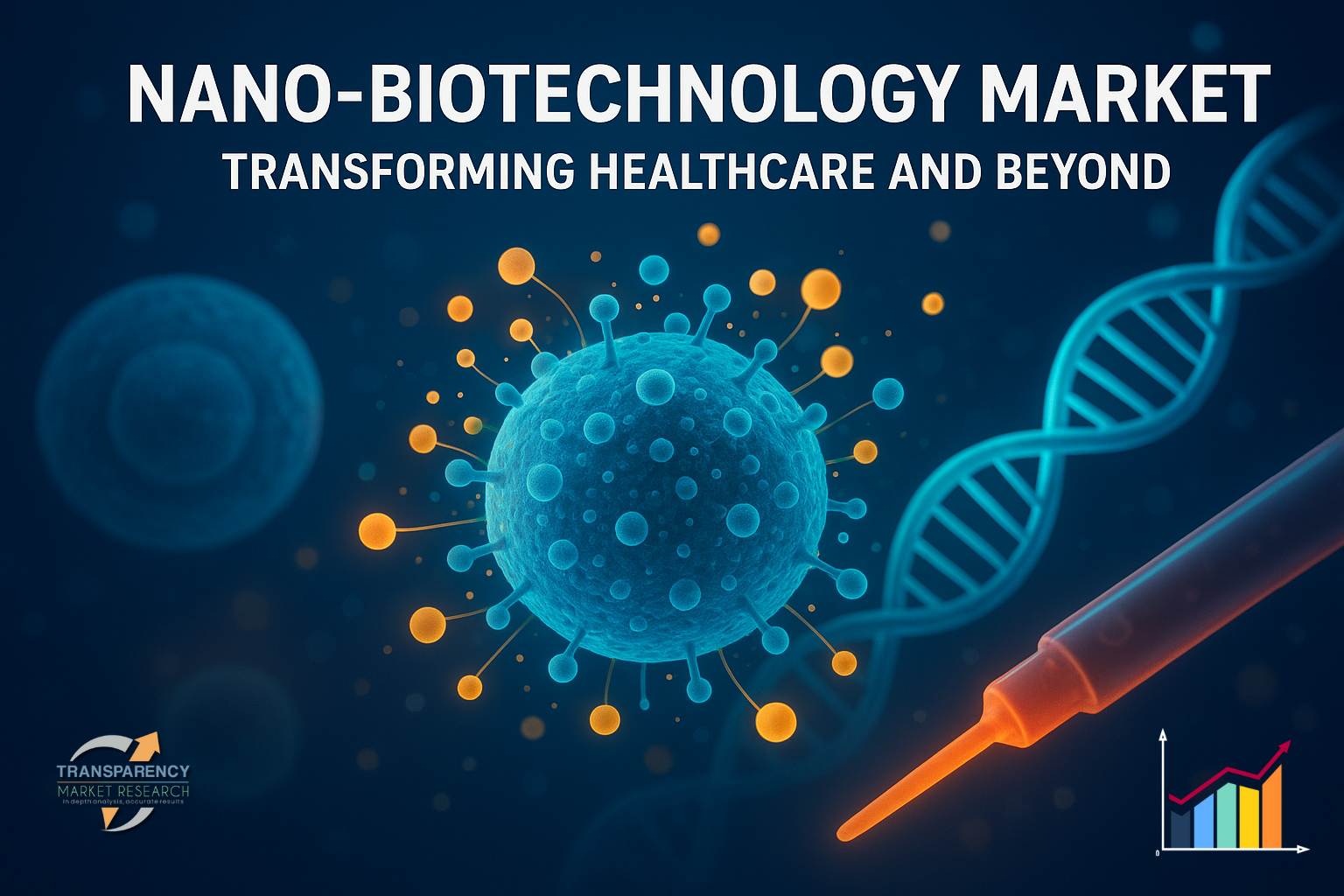
Nano-biotechnology is one of the most groundbreaking fields of science and technology that integrates the principles of nanotechnology with the life sciences. The combination allows scientists to manipulate biological systems at the molecular level, providing new possibilities for innovative applications in medicine, agriculture, diagnostics, and environmental greenness. From drug delivery systems that target towards nanosensors that are able to identify diseases in early stages, the impact of nano-biotechnology can already be seen on several industry platforms.
What makes this field so compelling is its capacity to close the loop between advanced research and practical solutions. In medicine, for example, nano-biotechnology is transforming the way treatments are discovered and administered. Nanoparticles are being used more and more as drug carriers, such that therapies are delivered to the precise location of infection or cancer and side effects are reduced to a minimum. In diagnostics, nano-facilitated biosensors are facilitating biomarker detection with unmatched precision and speed, such that intervention can begin earlier and patients can achieve better outcomes.
The agricultural sector is also benefiting from nano-biotechnology. Nano-fertilizers and nano-pesticides are being produced to enhance plant yields with reduced harmful environmental impact than traditional agrochemicals. Besides improving yields, they encourage green agriculture. Meanwhile, environmental applications of nano-biotechnology, such as water filtration and detoxification of polluted environments, are addressing problems of immediate global concern relating to shortages of resources and global warming.
Yet another determinant pushing the rapid adoption of nano-biotechnology is the growing necessity for precision medicine. Genomics and individualized care are driving advances that are now leading nano-scale technologies to be in the forefront of tailoring therapy based on the patient’s genetic signature. Personalized therapy promises improved treatment outcomes and increased patient satisfaction. Pharmaceutical companies and research institutions are investing increasingly in nanotech-therapy-based products, accelerating clinical trials and product launches.
Market Outlook: Growth Pattern
The global nano-biotechnology sector was valued at US$ 172.7 Bn in 2024.
The international nano-biotechnology market will progress with a CAGR of 9.3% from the forecast period 2025-2035 and reach US$ 459.5 Bn by 2035 end.
This high-growth trend is being driven by growing applications in pharma, agriculture, and environmental industries, alongside rigorous R&D expenditure and supportive government policies promoting improved healthcare technologies.
Analysis of the Key Players in Nano-Biotechnology Market
Since the companies in nano-biotechnology are continuously innovating to enhance product capabilities, innovative devices are being launched for enhancing workflow efficiency.
Johnson & Johnson Services, Inc., Abbott, Novartis AG, Merck and Co. Inc., Bristol-Myers Squibb Company, Danaher Corporation, Thermo Fisher Scientific, Inc., Pfizer, Inc., Sanofi, Nanobiotix, Arcturus Therapeutics, Inc., Cello Therapeutics, Merck KGaA, Ascendia Pharmaceutical Solutions, and OZ Biosciences are few of the leading companies found in the global nano-biotechnology industry.
These corporations not only are pushing the boundaries of scientific inquiry but also collaborating with startups, research centers, and academic institutions to expand nano-biotechnology’s use. Strategic partnerships, mergers and acquisitions, and joint ventures are common in this sector, reflecting high competition and high growth rate.
Drivers Responsible for Shaping the Market
1. Higher Prevalence of Chronic Diseases
As the incidence of conditions like cancer, diabetes, and cardiovascular diseases is on the rise globally, the need for newer therapies is acute. Site-specific treatment through nano-biotechnology offers improved therapeutic outcome with fewer side effects.
2. Growing R&D Expenditure
Private sector firms and governments are accelerating investments in nano-biotechnology research. This investment fuels clinical trials, accelerates the pace of new product development, and promotes healthcare technology innovation.
3. Integration with AI and Digital Health
Machine learning and artificial intelligence are being combined with nano-biotechnology to improve predictive modeling and increase the level of customization in treatments. The synergistic effect is poised to set new growth trajectories in precision medicine and diagnosis.
4. Environmental and Agricultural Innovations
Beyond the health sector, uses of nano-biotechnology in sustainable agriculture and green technologies are on the horizon. Green nanomaterials are being synthesized for environmental conservation, expanding the sector’s prospects for growth.
Challenges and Future Opportunities
Though it has enormous potential, the industry of nano-biotechnology is afflicted with high R&D costs, regulatory challenges, and ethical concerns. Safety and efficacy of the nano-enabled products need to be guaranteed before they gain broad acceptance. Further, the need for advanced infrastructure and qualified specialists can hinder acceptance in emerging markets.
But there is opportunity as well in challenges. The companies that can cope with regulatory regimes, build trust on transparency, and display meaningful benefits of nano-based technologies will do well to control the marketplace. With continued advances in technology and inter-disciplinary co-operation, nano-biotechnology has the potential to expand its footprint in healthcare, agriculture, and sustainability.
Conclusion
Nano-biotechnology is on a high-growth path in a market propelled by its life-transforming potential across various industries. As it continues to redefine healthcare with precision medicine, propel agricultural efficiency, and offer solutions for environmental challenges, the sector is set to form the backbone of tomorrow’s innovation. Backed at the top level by research institutions, governments, and leading players across the world, nano-biotechnology is not a scientific accomplishment in itself—it is the force behind a healthier, more sustainable, and technologically advanced tomorrow.