Healthcare is no longer confined to hospitals, clinics, or physician referrals. In today’s fast-paced digital era, consumers are increasingly taking control of their health decisions—and direct-to-consumer (DTC) laboratory testing stands at the center of this transformation. From at-home blood tests and genetic screening kits to wellness and preventive diagnostics, DTC lab testing is redefining how people access and interpret health information.
The appeal is simple yet powerful: convenience, privacy, speed, and empowerment. Consumers can now order tests online, collect samples at home, and receive results digitally—often without visiting a healthcare facility. This shift aligns perfectly with modern lifestyles, where time efficiency and personalized insights matter more than ever.
Moreover, the growing awareness around preventive healthcare, early disease detection, and wellness monitoring has fueled demand for accessible diagnostic solutions. As chronic conditions, lifestyle-related disorders, and infectious diseases continue to rise globally, DTC laboratory testing is emerging as a proactive healthcare alternative rather than just a reactive one.
Market Outlook: A Rapidly Expanding Diagnostic Ecosystem
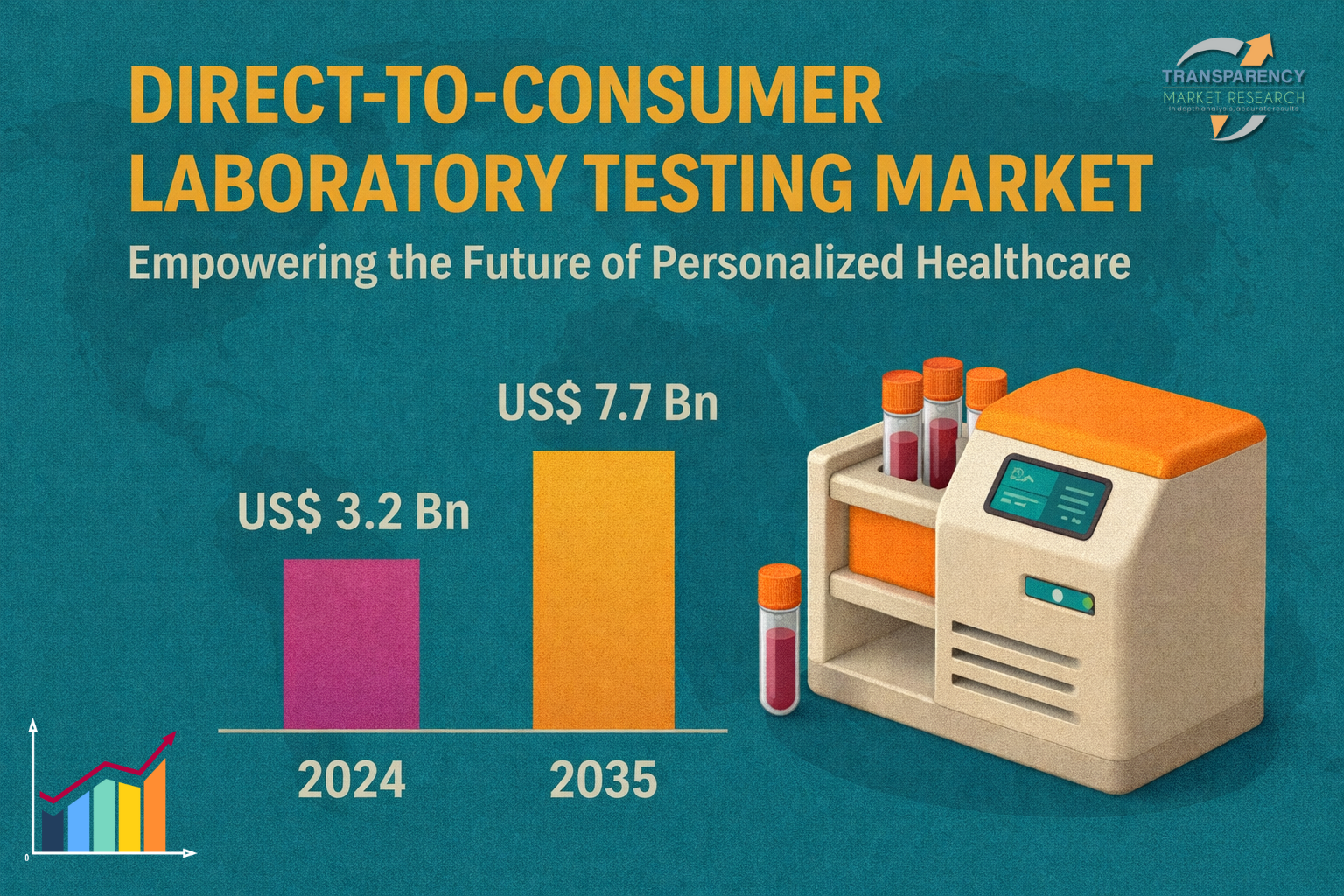
The global direct-to-consumer laboratory testing market was valued at US$ 3.2 billion in 2024 and is expected to witness robust growth over the next decade. By 2035, the market is projected to reach US$ 7.7 billion, expanding at a compound annual growth rate (CAGR) of 8.3% from 2025 to 2035.
This steady expansion is driven by rising consumer demand for convenience, accessibility, and autonomy in healthcare decision-making. The growing prevalence of chronic, lifestyle-related, and infectious diseases is further accelerating adoption. Additionally, the healthcare industry is experiencing a paradigm shift toward preventive care, wellness-focused solutions, and personalized medicine, all of which strongly favor the direct-to-consumer testing model.
Key Drivers Shaping Market Growth
Growing Demand for Convenience and Accessibility
Traditional diagnostic testing often involves long wait times, multiple appointments, and logistical challenges. DTC laboratory testing eliminates many of these barriers by offering home sample collection and digital result delivery. This is especially valuable for individuals in remote or underserved areas.
Rise of Preventive and Personalized Healthcare
Consumers today are more proactive about their health. Genetic testing, hormone panels, nutritional deficiency tests, and wellness screenings allow individuals to understand health risks early and take preventive measures. Personalized insights are no longer a luxury—they are becoming an expectation.
Increasing Prevalence of Chronic and Lifestyle Diseases
Conditions such as diabetes, cardiovascular diseases, obesity, and metabolic disorders require ongoing monitoring. DTC lab tests offer a cost-effective and convenient solution for routine health tracking, reducing dependence on hospital visits.
Technological Advancements and Digital Health Integration
Innovations in diagnostics, AI-driven data interpretation, mobile health apps, and telemedicine platforms are enhancing the accuracy and usability of DTC testing. Seamless integration with digital health ecosystems is improving consumer trust and engagement.
Challenges and Regulatory Considerations
Despite its rapid growth, the DTC laboratory testing market faces challenges related to data privacy, test accuracy, regulatory compliance, and clinical interpretation. Regulatory frameworks vary across regions, and ensuring the reliability of test results remains critical to maintaining consumer confidence.
Additionally, while autonomy is a major advantage, lack of professional guidance can sometimes lead to misinterpretation of results. To address this, many companies are integrating physician consultations, genetic counseling, and telehealth services into their offerings.
Competitive Landscape: Leading Players Driving Innovation
The direct-to-consumer laboratory testing market is moderately fragmented, with established diagnostic companies and innovative startups competing to expand their reach. Leading players are focusing on test portfolio expansion, partnerships, digital platforms, and global market penetration.
Some of the prominent companies operating in this market include:
- Labcorp
- 23andMe, Inc.
- Myriad Genetics, Inc.
- Color Health, Inc.
- Gene by Gene, Ltd.
- Ancestry
- MyHeritage Ltd.
- Veritas Intercontinental
- GenePlanet
- Mapmygenome
- EasyDNA
- Quest Diagnostics Incorporated
- Genesis Healthcare Co. (A.D.A.M. Innovations Co.)
- Metropolis Healthcare
- Helix, Inc.
- Targeted Genomics LLC
These companies are investing heavily in research, expanding genetic and molecular testing capabilities, and enhancing user experience through digital health tools.
Future Outlook: What Lies Ahead?
The future of the direct-to-consumer laboratory testing market looks highly promising. As healthcare systems worldwide shift toward value-based care and early diagnosis, DTC testing is expected to play a pivotal role. Increased consumer trust, improved regulatory clarity, and integration with mainstream healthcare providers will further accelerate adoption.
In the coming years, advancements in genomics, biomarker discovery, and AI-driven analytics will unlock new opportunities for personalized healthcare solutions. DTC laboratory testing is no longer just a convenience—it is becoming a cornerstone of modern, patient-centric healthcare.