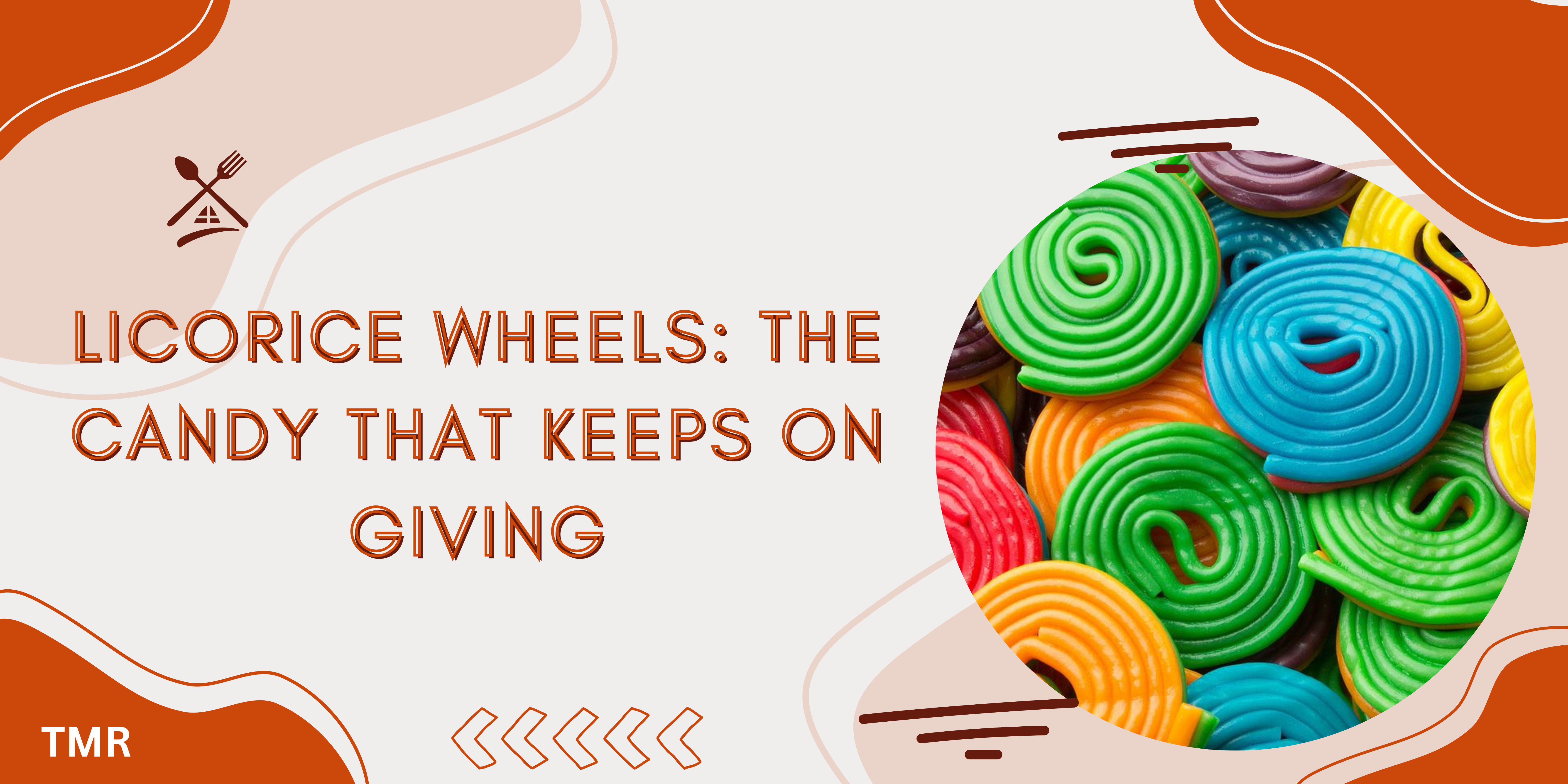
Licorice wheels- the chewy, twisted delights can be traced back to the early 1900s. These candies have their European origins and gained popularity rapidly due to their distinct flavor and interesting appearance.
Manufacturers experimented with different textures and sizes with licorice as the main component before deciding on the unique wheel shape. With time, licorice wheels regained appeal as a treasured classic in candy aisles worldwide, bringing a whimsical twist to the confectionery experience and a nostalgic flavor of bygone days.
What Makes Licorice Wheels Stand Out?
Licorice wheels are unique due to their rich taste profile and distinctive texture. In contrast to conventional licorice sticks, licorice wheels have a chewy, somewhat elastic feel that makes unraveling each loop a delightful tactile experience. This distinct texture not only makes eating more enjoyable but also makes the process enjoyable.
Furthermore, licorice extract’s rich, somewhat sweet taste gives licorice wheels their strong flavor. Because of their strong flavor, licorice wheels stand out from other candies and are highly sought by licorice lovers who want a strong, flavorful experience.
Application of Licorice Wheel Candies
Beyond their use as delicious candies, licorice wheels have unexpected uses in a variety of fields. First of all, these sweets are useful elements in cooking. Their strong licorice taste gives pastries, cookies, and ice creams more depth.
They add a particular flavor to confections when chopped or melted, giving classic recipes a modern touch. In addition, licorice wheels may be used to savory recipes, providing an unexpected contrast to meats or sauces—particularly in Scandinavian cooking, where licorice is a highly valued taste component.
Second, licorice wheels are used in herbal medicines and conventional medicine. The main component, licorice root, has ingredients that are thought to provide several health advantages, such as antiviral and anti-inflammatory qualities. For millennia, licorice has been utilized in certain cultures to treat respiratory conditions, digestive problems, and even sore throats. Concentrated licorice wheels provide a handy way to ingest this plant for possible health advantages.
Last but not least, licorice wheels have stimulated artistic and crafty inventiveness. They are popular alternatives for edible embellishments on cakes and pastries because of their vivid colors and unique forms.
Furthermore, artists have experimented with combining licorice wheels into mixed-media artworks and sculptures, demonstrating their adaptability outside of the food industry. In this approach, licorice wheels become more than just treats and serve as inspiration and catalysts for creativity in various fields.
Mixology in this Field
The introduction of licorice wheels into mixology has led to creative concoctions. Bartenders employ them as garnishes or infusions into spirits to create visually arresting, flavorful cocktails. This contemporary take on traditional cocktails brings sweetness and depth, appealing to daring drinkers looking for unusual experiences.
Cocktails using licorice extract highlight how versatile the sweet is, combining the worlds of mixology and confections. These creative concoctions give a new perspective on classic recipes as the cocktail culture develops, enhancing the drinking experience with whimsical and surprising taste combinations.
Conclusion
The future potential for licorice wheels depends on sustained innovation in various sectors. Their adaptability offers new possibilities in multiple undertakings, from creative endeavors to therapeutic uses to gastronomic experimentation.
Licorice wheels may spur more research into confections, mixology, and other areas as consumer tastes change, setting trends and providing unique experiences for people looking for flavorful and exper