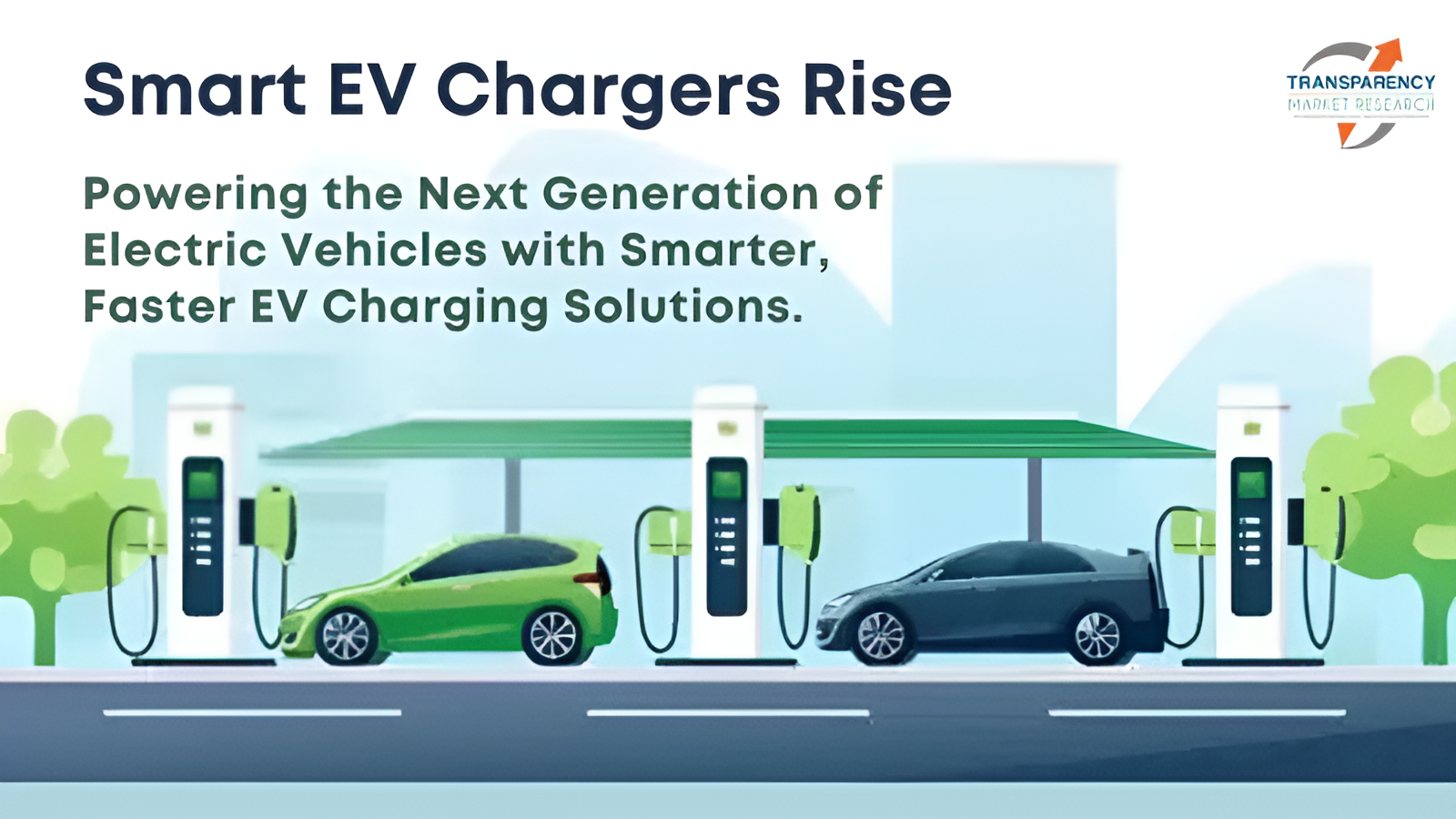
Introduction of EV Chargers Ecosystem
The electric vehicle (EV) charging ecosystem is large and dynamic involving a number of actors, technologies, and infrastructure needed to offer electric vehicles efficient charging services. The hardware component displays Level 1, Level 2, and DC fast chargers together with their associated components such as connectors, cables, and power modules. This element operates in a variety of locations whereby such charging can be at a residence, commercial, or public charging stations.
Software solutions such as charging management platform, apps for locating public EV charging stations and their availability, and billing systems are also part of this ecosystem to ensure that users are in contact with the energy grid operators and service providers. Such policies will eventually lead to international regulations and incentives shaping the development and deployment of new infrastructures for EV charging in different corners of the world.
Otherwise, this EV charging ecosystem shores up hardware, software, and strong networks with all market players including OEMs, utility companies, charging point operators (CPOs), e-mobility service providers (EMSPs), and technology integrators into one entity. The cross interactions lead to innovations such as vehicle-to-grid (V2G) integration, smart charging, and dynamic load management, all of which are aimed at optimizing grid usage and improving energy efficiency.
This ecosystem sees phenomenal growth and expansion by the minute as more people adopt EVs and as new businesses emerge, such as charging by subscriptions and roaming networks. The electrification incorporated into all clean transformations comes from the womb of the ecosystem: the EV chargers’.
Increasing Demand for Enhanced Vehicle Security and Advanced Anti-theft Measures Drives EV Chargers Ecosystem Market Growth:
The global EV chargers ecosystem market was valued at US$ 34.1 Bn in 2024 and is expected to register a CAGR of 22.6% during 2025-2035 to reach US$ 321.6 Bn by 2035. The global market for electric vehicle (EV) chargers finds its growth driven by rising acceptance of electric vehicles all over the globe. Environmental issues and increasing government restrictions on emissions serve as catalysts to facilitate the customer transition to EVs.
The growth of EVs now brings a paradigm shift toward strengthening the charging infrastructure to accommodate the rapidly multiplying fleet. Both – governments and private stakeholders are putting more money into the insights and development of installing charging stations at residences and commercial sectors to provide easier and faster charging options for end users.
The requirement for EVs would mean that many advancements have been made in charging technologies today, including fast-charging stations and smart charging methods involving renewable sources. These innovations not only confer ease to the users but also provide greater grid efficiencies and stability. Moreover, targeted incentives and subsidies for EVs and charging infrastructure installations have helped propel the market. Several countries have now set targets for the adoption of EVs and are supporting that commitment with funding for public charging networks.
To satisfy a heterogeneous clientele of EV users, stakeholders are putting in all sorts of charging solutions ranging from residential charging, commercial charging, and public charging stations. Rapid development of innovations such as ultra-fast DC chargers and wireless charging technologies would successfully minimize charging time while easing user consideration.
Furthermore, integration of renewable energy sources into charging infrastructure would operate in line with global decarbonisation objectives, thus creating additional advantage for market expansion. The irreversible union of governments, automotive manufacturers, and energy companies is guaranteeing the establishment of cohesive charging networks and making sure that the infrastructure development is toe to toe with the rapid adoption of electric vehicles.
Trends Driving Innovation of EV Chargers Ecosystem Market:
- Expansion of Fast-Charging Networks
- Integration of Smart Charging Solutions
- Development of Wireless Charging Technologies
The EV Chargers Ecosystem Market witnessing Rapid Advancements Driven by Major Key Players Focusing on Innovation, Partnerships, and Restructuring
- In April 2025, the four big European EV charging companies: Italy’s Atlante, Germany’s Ionity, Fastened of The Netherlands, and Electra of France will create an alliance called Spark. It aims to unite Europe’s largest public charging network in order to include 11,000 charging points from 1,700 stations in 25 nations. This consortium will start operations in June 2025, and it envisions an ultra-fast charging capacity of up to 400 kW, addressing consumer anxieties over the ranges of electric vehicles.
- In April 2025, BP recently reported the disbanding of a low-carbon mobility team that has been dealing with alternative fuels such as hydrogen and liquefied natural gas for transportation. This has come on the heels of a cut in strategy for the energies major to place more commitment to traditional oil and gas businesses. BP has, however, insisted the reorganization exercise was not going to affect the company’s charge site called BP Pulse, and it would continue expanding in key global markets.
- In December 2024, the U.S. Department of Energy loaned US$ 1.25 Bn to install 7,500 electric vehicle chargers at 1,100 stations in the next five years. This development is part of Appliance Superstation 350 kW, contributing to the aim of the Biden administration: 500,000 chargers across all of its territories by 2030, as well as managing the transition to electric mobility.
- In January 2024, as part of the developments toward convenience and efficiency in the usage of EVs through standardized and wide use of battery-swapping infrastructure, Nio entered strategic partnerships with automotive companies such as Chang’an Automobile, Geely Holding, JAC Group, and Chery Automobile around the axes of battery standards, swapping technology, and expansion of battery swap networks.
Future of EV Chargers Ecosystem Market
The future of the EV chargers ecosystem market will be transformative due to global inclination toward clean transportation and the strict net-zero emission targets in the countries. As electric vehicles get mainstream, the demand for strong, scalable, and intelligent charging infrastructure will only increase. The market will further diversify as more number of Level 2 and DC fast chargers are deployed across urban, rural, and highway networks to cater to different consumer needs. Governments across the globe are providing huge funding and announcing favorable policies to help gain speed in EV charger installations that would ensure equitable access and ranges from its users’ anxiety.
Technological advances are going to very much re-shape the ecosystem. Real-time monitored smart charging would be common, with dynamic load management and energy optimization capabilities that make real-time monitoring by grids possible. Adding things like solar-powered charging stations, as well as V2G technologies, will take us toward greener solutions.
Automated and highly user-friendly features will change the face of charging through inductive and robotic charging arms. Finally, instead of having to tap on several interfaces or memberships, these interoperable charging platforms could open up roaming services across multiple networks.
Effective investments from the private sector coupled with strategic partnerships amongst carmakers, providers of energy, and tech firms would prove significant in speeding up the transformation of this ecosystem. Improvement in battery technology would hence imply increasing adoption rates of electric vehicles, requiring the EV charging infrastructure to be infinitely adaptable, future proof, and scalable.
Emerging markets of Asia-Pacific, Latin America, and Africa are expected to rapidly catch up in the development of infrastructure that will enable them to meet the standards of the already developed regions within a short span of time. The future for EV chargers ecosystems will therefore entail putting in place a global network that is, at the same time, resilient, smart, and accessible in order to cater to today’s demand for EVs but also to look into the electrified future of mobility.
To tackle these challenges, EV Chargers Ecosystem is being explored:
- Grid Capacity and Load Management: The increasing number of EVs and charging stations places enormous stress on existing electrical grids. Fast, high-power chargers, when pulled simultaneously, cause the peak load phenomenon, requiring utilities to invest in grid upgrades. Load imbalance and smart charging systems, if not deployed, threaten the grid with potential instabilities and blackouts. Also included in the integration mix are the intermittent renewables such as solar and wind, which contribute further complexities. Demand management with advanced energy management systems and implementing time-of-use pricing models and vehicle-to-grid (V2G) technology are considered part of future-proof grid strategies.
- Standardization and Interoperability: The lack of worldwide standards for EV connectors, charging protocols, and communication interfaces causes users and operators to slowly stop. Different plug types are used in different regions and by different manufacturers (CCS, CHAdeMO, GB/T), making it difficult for one to access across borders and networks. Likewise, incompatible software platforms shut the door on seamless payments, scheduling, and roaming between networks. This fragmentation reduces user convenience and scalability. Concerted endeavours to promulgate global standards and promote interoperability such as Open Charge Point Protocol (OCPP) are indispensable in developing a homogenously user-oriented and customer-friendly ecosystem.
- Infrastructure Cost and Scalability: Setting up the charging facilities for EVs involves heavy capital expenditure on materials and hardware, installation, site preparation, and grid interconnection. Publicly owned fast-charging stations become very expensive, as they must provide heavy-duty transformers and upgrade utilities. For the private sector, returning costs through user fees may be a slow process where low utilization applies. This raises questions of scalability, especially in rural and neglected areas. Governments, utilities, and investors are now searching for various innovative financing models—public-private partnerships, subsidies, and usage-based pricing to overcome these economic hurdles and convert such projects into scalable ones.


