The global healthcare landscape is undergoing a powerful transformation, driven by digital innovation and a growing emphasis on preventive care. At the heart of this shift lies the Wearable Healthcare Devices Market, which is redefining how individuals monitor, manage, and improve their health. From smartwatches that track heart rate to advanced wearable sensors capable of continuous glucose monitoring, these devices are steadily becoming an integral part of everyday life.
Market Outlook 2035: Strong Growth Ahead
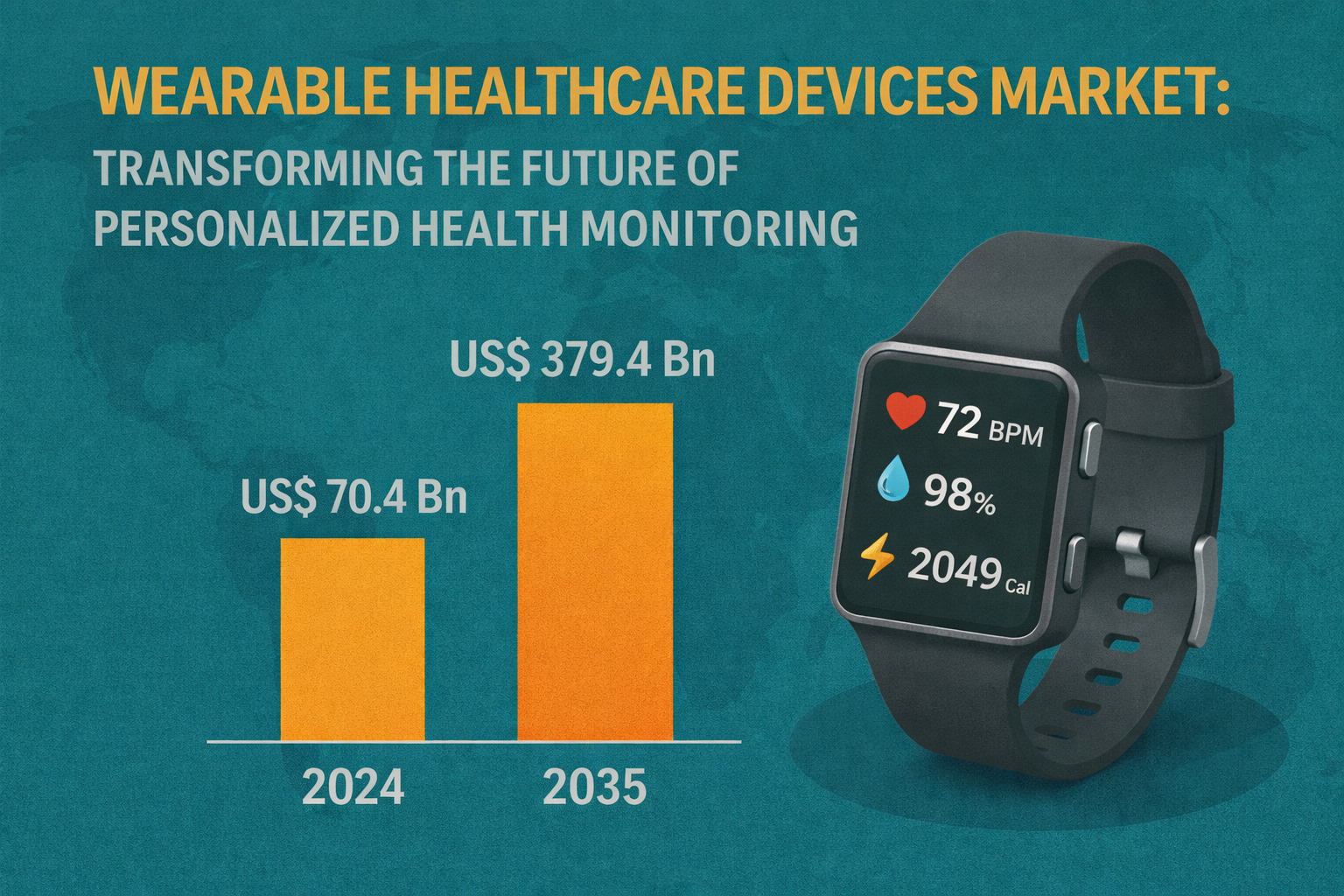
The global Wearable Healthcare Devices Market was valued at US$ 70.4 billion in 2024 and is expected to surge to US$ 379.4 billion by 2035, expanding at an impressive CAGR of 16.9% from 2025 to 2035. This remarkable growth highlights the increasing acceptance of wearable technologies among consumers, healthcare providers, and insurers alike.
One of the most significant growth drivers is the rising prevalence of chronic diseases such as diabetes, cardiovascular disorders, obesity, and respiratory conditions. These long-term health issues require continuous monitoring rather than occasional clinical visits. Wearable healthcare devices address this need by enabling real-time data collection, early detection of abnormalities, and proactive health management.
Why Wearable Healthcare Devices Are Gaining Momentum
The rapid adoption of wearable healthcare devices can be attributed to several interconnected factors:
First, there is a growing global focus on preventive healthcare. Instead of treating diseases after symptoms appear, individuals are increasingly inclined to monitor vital signs regularly and take early action. Wearables empower users to track parameters such as heart rate, physical activity, sleep quality, blood oxygen levels, and even stress indicators.
Second, advancements in sensor technology, artificial intelligence, and wireless connectivity have significantly improved device accuracy and usability. Modern wearables are no longer bulky or complex; they are sleek, comfortable, and seamlessly integrated with smartphones and cloud-based health platforms.
Third, the shift toward remote patient monitoring has accelerated, especially after the global pandemic. Healthcare providers are now more open to using wearable data to monitor patients outside traditional clinical settings. This approach not only reduces hospital visits but also lowers healthcare costs while improving patient outcomes.
Expanding Applications Across Healthcare Segments
Wearable healthcare devices are no longer limited to fitness enthusiasts. Their applications now span multiple healthcare domains:
- Chronic Disease Management: Continuous glucose monitors, cardiac rhythm trackers, and blood pressure wearables help patients manage long-term conditions effectively.
- Elderly Care: Wearables equipped with fall detection, emergency alerts, and activity monitoring enhance safety and independence for aging populations.
- Sleep and Respiratory Monitoring: Devices designed to track sleep patterns, breathing, and oxygen saturation support the diagnosis and management of sleep disorders.
- Sports and Performance Health: Athletes and professionals use wearables to optimize performance, prevent injuries, and monitor recovery.
As these applications continue to diversify, the market is attracting interest from both medical device manufacturers and technology companies.
Competitive Landscape: Innovation at the Core
The Wearable Healthcare Devices Market is highly competitive and innovation-driven. Leading players are continuously investing in research and development to enhance device capabilities, accuracy, and user experience. Companies such as Medtronic plc, Omron Corporation, GE HealthCare, Abbott, Koninklijke Philips N.V., Biobeat, VitalityWatch, SOMNOmedics AG, LiveMetric S.A., Xplore Health Technologies Pvt. Ltd., Masimo, WS Audiology A/S, WHOOP, Aktiia SA, and ENABLE INJECTIONS are shaping the future of this industry.
These players are actively pursuing strategies such as product launches, strategic collaborations, technological upgrades, and geographic expansion. Many are also focusing on integrating wearables with digital health ecosystems, electronic health records, and telemedicine platforms to offer end-to-end healthcare solutions.
Each major company operating in this market has been extensively profiled based on key parameters, including company overview, financial performance, business strategies, product portfolio, business segments, and recent developments. Such comprehensive profiling highlights how innovation, scalability, and strategic partnerships are crucial for long-term success in this rapidly evolving market.
Regional Trends and Consumer Acceptance
North America currently holds a significant share of the wearable healthcare devices market, driven by high healthcare expenditure, early technology adoption, and strong presence of leading manufacturers. However, Asia Pacific is expected to witness the fastest growth during the forecast period. Rising health awareness, increasing smartphone penetration, and growing middle-class populations in emerging economies are fueling demand across the region.
Consumer acceptance is also improving steadily. As data privacy measures strengthen and device accuracy continues to improve, users are becoming more confident in relying on wearable data for health-related decisions.
The Road Ahead
Looking ahead, the future of the wearable healthcare devices market appears highly promising. Integration of AI-driven analytics, predictive healthcare models, and personalized health insights will further enhance the value of these devices. Wearables are expected to move beyond monitoring and play a direct role in diagnosis, treatment guidance, and clinical decision-making.
In conclusion, wearable healthcare devices are no longer optional accessories—they are fast becoming essential tools in modern healthcare. With strong market growth projected through 2035, continuous technological advancements, and rising demand for proactive health management, the wearable healthcare devices market is set to play a pivotal role in shaping a smarter, more connected, and patient-centric healthcare ecosystem.