Envision waking up each day and having to administer lifesaving medication just to be “normal.” For millions of people with diabetes, that is their daily reality—and insulin is their hero.
The insulin business is more than growth charts and statistics; it’s a story of innovation, perseverance, and a race against time to make the lives of people living with diabetes easier. As eating habits evolve, populations grow older, and stress increases, diabetes has become an epidemic worldwide. And meeting it is an insulin business evolving at breakneck speed—not only medically, but access- and affordability-wise as well.
Let’s take a peek into how the insulin industry is transforming lives—and what the future holds for this life-changing industry.
Diabetes is no longer confined to rich nations or the elderly. It’s now becoming increasingly common in youths in low- and middle-income nations. According to the International Diabetes Federation (IDF), the number of individuals with diabetes worldwide is estimated to be over 530 million, a figure projected to increase to over 640 million by 2030.
That is where insulin enters the picture. As a hormone essential to the regulation of blood sugar levels, insulin treatment is now an accepted standard of care in type 1 diabetes treatment and most type 2 diabetes treatment too. But then there is the rub: availability.
Even though insulin has been around for over a hundred years, it is still prohibitively costly and inaccessible in most of the globe. In some parts of Africa or South Asia, access to insulin literally amounts to life and death.
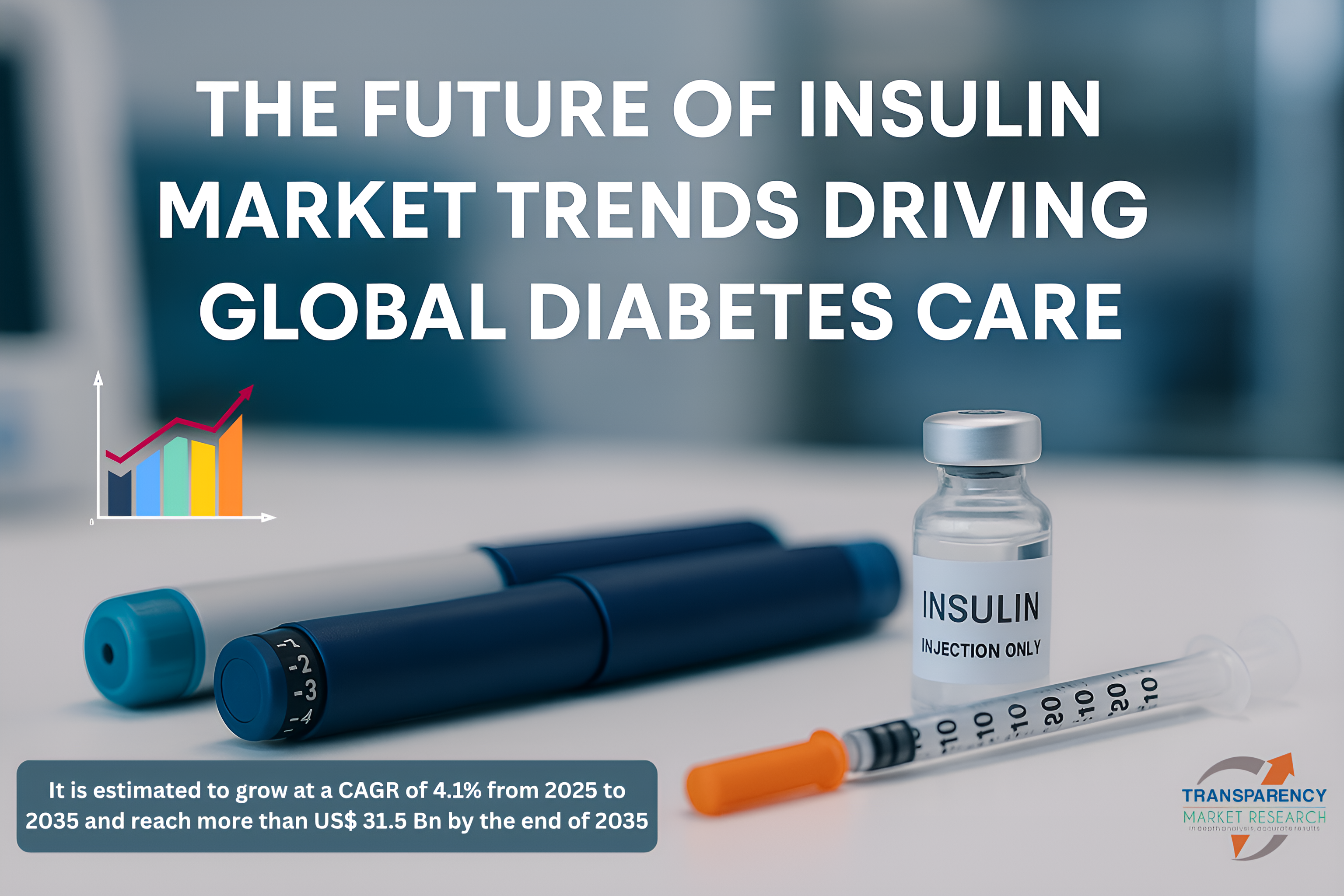
The world insulin market is on a positive growth path. It was worth US$ 20.3 billion in 2024 and is likely to grow at a CAGR of 4.1% from 2025 to 2035. Towards the end of the year, it will be over US$ 31.5 billion.
This expansion is not driven by rising instances of diabetes alone. It’s also driven by:
- Technology innovation: Intelligent insulin pens, glucose monitoring, and artificial intelligence-enabled delivery systems.
- Biosimilar development: Facilitating affordable insulin by means of offering quality generic insulin.
- Public-private partnerships: Partnerships that focus on improving distribution in under-served markets.
In short, this is not just economic growth—it’s human-centered growth.
- In December 2024, the Egyptian Drug Authority approved EVA Pharma’s insulin glargine injection, a product of EVA Pharma-Eli Lilly and Company joint venture. Launched in 2022, the aim is to offer more than one million people a year—mostly from Africa—stable access to high-quality and affordable human and analog insulin. This is a strong testament to cross-continent partnership to drive public health on a large scale.
- Another landmark event took place in June 2024, when Teva Pharmaceuticals, Inc., a US subsidiary of Teva Pharmaceutical Industries Ltd., launched an authorized generic of Victoza1 (liraglutide injection 1.8mg). The move was a giant step towards the affordability of insulin treatment in the US, a country where insulin prices have been controversial for decades.
These moves aren’t just about market share—they’re about reframing the history of insulin from a commodity to a necessity within everyone’s reach.
There is a combination of the traditional pharma giants and the emerging biotech leaders on the international insulin market. They are:
- Novo Nordisk A/S
- Sanofi
- Eli Lilly and Company
- Biocon Ltd.
- Tonghua Dongbao
- Shanghai Fosun Pharmaceutical Co., Ltd.
- Becton, Dickinson, and Company
- Julphar
- Braun Melsungen AG
- Ypsomed AG
- Biodel, Inc.
- …are busy reshaping the insulin landscape.
These firms are increasingly working with hospitals, specialist clinics, and research centers to target more individuals and offer genuine solutions in the developed and emerging markets. Ranging from insulin R&D in the next generation to enhancing logistics to deliver temperature-sensitive goods to rural pockets, these firms are setting new benchmarks in the sector.
All of them have been analyzed in recent market studies based on their financials, product plans, R&D pipelines, and geographic growth—allowing us to know them better in terms of their strengths and direction.
What’s the Marketer IS Headed
Although the future of the insulin market is bright, there are a few things to look out for:
Biosimilars Boom
Watch for a sudden spike in insulin biosimilars as patents expire and regulators push more competition. That can reduce treatment costs across high-burden markets like India, Brazil, and Southeast Asia.
Digital Health Integration
Intelligent insulin pens synchronized with apps, glucose meters that predict glucose surges—these will not only make insulin injection more precise and patient-friendly but also more accessible.
Personalized Medicine
Genomics advances can potentially allow doctors to tailor insulin treatment to an individual’s personalized metabolic signature, improving efficacy and reducing side effects.
Affordability & Access Reforms
Policy shifts, especially in America, will continue to define pricing strategies and drive manufacturers toward affordability and transparency.
Wxy It Matters Insulin is not only a medicine—it’s a lifeline. And with the world struggling with the diabetes epidemic, making it more accessible, more affordable, and more innovative isn’t just a business necessity, it’s a moral one. From huge corporate collaborations to delivery and patient care innovation, the insulin sector is working to deliver hope, health, and equity to millions. Growth can be quantified in billions, but its real value is in increased quality of life, extended life, and empowered people.
The history of insulin, from the discovery in 1921 to the current AI devices, is phenomenal. But we still have miles to go before we arrive at a point where everyone who needs insulin can access it—without going broke. The next decade will test the industry’s will, creativity, and compassion. With the pace today, the worldwide insulin market isn’t just growing—it’s transforming lives.