Quality assurance is the backbone of pharmaceutical manufacturing. Every tablet produced must meet strict standards for durability, consistency, and safety before reaching patients. This is where tablet hardness testers play a crucial role. These instruments measure the mechanical strength of tablets, ensuring they can withstand packaging, transportation, and handling while still dissolving properly in the body. As pharmaceutical production continues to expand globally, the demand for reliable tablet hardness testing equipment is steadily rising.
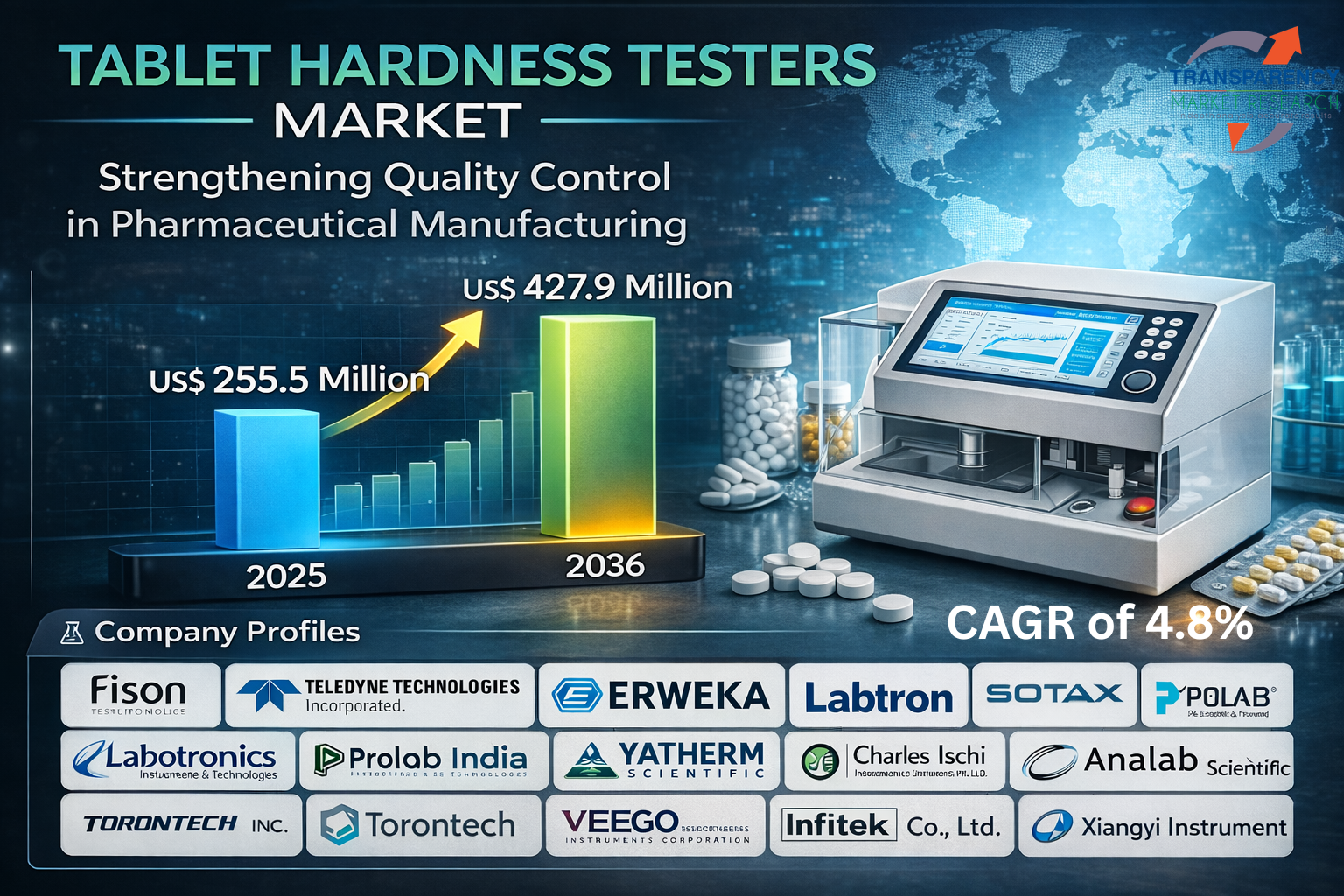
The global tablet hardness testers market reflects this growing importance. The industry was valued at US$ 255.5 million in 2025 and is projected to reach US$ 427.9 million by 2036, expanding at a compound annual growth rate (CAGR) of 4.8% from 2026 to 2036. This steady growth highlights the increasing focus on pharmaceutical quality control, regulatory compliance, and automation in drug manufacturing.
Why Tablet Hardness Testing Matters
Tablets are one of the most common forms of medication worldwide. However, their effectiveness depends on maintaining the right balance between strength and disintegration. If a tablet is too soft, it may break during packaging or shipping. If it is too hard, it may not dissolve properly in the digestive system.
Tablet hardness testers help manufacturers maintain this delicate balance. These devices measure the force required to break a tablet, providing valuable data that helps pharmaceutical companies maintain consistency across large-scale production batches.
Modern hardness testers have evolved significantly from traditional manual devices. Today’s advanced instruments offer digital displays, automated testing, data storage, and integration with laboratory management systems. This technological evolution is improving testing accuracy while reducing human error.
Rising Pharmaceutical Production Driving Market Growth
One of the key factors fueling the growth of the tablet hardness testers market is the continuous expansion of the pharmaceutical industry. Global demand for medicines—particularly generic drugs—has increased dramatically due to population growth, aging demographics, and the rising prevalence of chronic diseases.
As pharmaceutical companies scale up production, maintaining quality standards becomes even more critical. Tablet hardness testers are essential for ensuring every batch meets regulatory requirements set by authorities such as the FDA and other international regulatory agencies.
Additionally, the growth of contract manufacturing organizations (CMOs) has boosted the need for reliable quality control equipment. These organizations produce drugs for multiple pharmaceutical companies and must maintain strict compliance with quality assurance standards, further driving demand for hardness testing systems.
Technological Advancements Improving Testing Accuracy
Technology is transforming the tablet hardness testing landscape. Modern testers are equipped with advanced sensors, automated loading systems, and sophisticated software that enables real-time analysis and reporting.
Automated tablet hardness testers allow pharmaceutical laboratories to test multiple samples quickly and accurately. These systems not only improve productivity but also ensure consistent testing procedures. Digital integration with laboratory information management systems (LIMS) is another key innovation that helps streamline quality control workflows.
In addition, portable hardness testers are gaining popularity among smaller laboratories and research institutions due to their convenience and cost-effectiveness. These devices provide reliable testing without requiring large laboratory setups.
Expanding Applications in Research and Development
Beyond manufacturing, tablet hardness testers are increasingly used in pharmaceutical research and development. During drug formulation, scientists experiment with various ingredients, compression levels, and coating techniques. Hardness testing helps researchers evaluate how these factors affect tablet durability and performance.
As pharmaceutical companies invest heavily in new drug development, the need for advanced testing equipment is expected to grow. This trend is particularly noticeable in emerging markets, where pharmaceutical production and R&D investments are expanding rapidly.
Competitive Landscape and Key Industry Players
The tablet hardness testers market is moderately competitive, with several global and regional companies offering advanced testing solutions. Manufacturers are focusing on product innovation, precision measurement technologies, and automation features to strengthen their market presence.
Some of the leading players operating in the global tablet hardness testers industry include Fison Instruments Ltd., Teledyne Technologies Incorporated, Erweka GmbH, Labtron Equipment Ltd., SOTAX, Prolab India, Labotronics Scientific, Yatherm Scientific, Anand Scientific Company, Charles Ischi AG, Analab Scientific Instruments Pvt. Ltd., Torontech Inc., Veego Instruments Corporation, Infitek Co., Ltd., and Xiangyi Instrument.
These companies are actively investing in research and development to introduce more accurate, user-friendly, and automated tablet testing systems.
Future Outlook
Looking ahead, the tablet hardness testers market is expected to grow steadily as pharmaceutical manufacturing becomes more sophisticated and quality standards continue to tighten worldwide. Automation, digital integration, and smart laboratory technologies will likely shape the next generation of hardness testing equipment.
Emerging pharmaceutical hubs in Asia-Pacific, Latin America, and the Middle East are also expected to create new growth opportunities for manufacturers of tablet testing instruments.
Ultimately, as the pharmaceutical industry continues to expand, ensuring the strength, safety, and consistency of tablets will remain a top priority. Tablet hardness testers will continue to play a vital role in delivering reliable medicines to patients across the globe.