Imagine you could look under your skin — to inspect moles, spots, and lesions in close-up detail with such precision that the early warning signals of life-threatening illnesses like melanoma would be identified with certainty. This is no longer just a dream, thanks to the incredible medical device known as the dermatoscope.
What is a Dermatoscope?
A dermatoscope is a handheld diagnostic instrument that dermatologists and skin specialists use to inspect skin lesions and abnormalities more clearly. Whereas the naked eye sees only the surface, a dermatoscope employs magnification and polarized light to reveal the faint patterns and structure of the skin. This is the perspective that allows doctors to identify benign moles from potentially malignant moles without injurious biopsies in most cases.
This tiny gadget has made its way into dermatology clinics worldwide as an indispensable tool, increasing early detection rates and patient outcomes. Let’s dive into dermatoscopes, their function, why they matter, and what the future holds for this incredible technology.
How Does a Dermatoscope Work
Essentially, the dermatoscope is an easy yet efficient instrument. It uses two main technologies:
- Magnification: Dermatoscopes typically offer approximately 10x magnification. This allows clinicians to see very small structures not visible to the naked eye.
- Polarized or Non-polarized Light: Polarized light reduces surface reflections, hence one can easily observe beneath the skin’s surface layer. Non-polarized light, which is often used in conjunction with immersion fluids such as alcohol or oil, allows one to easily observe various skin lesion characteristics.
Together, they enable doctors to see the pattern of pigment, blood vessels, and other diagnostic markers that distinguish benign skin markings from early-cancerous skin markings. The benefit? Faster, more precise diagnoses and fewer unnecessary biopsies.
The Growing Importance of Dermatoscopes
Since skin cancer prevalence is also increasing globally — mostly due to increased sun exposure and population aging — demand for reliable diagnostic techniques is soaring.
Early detection is crucial because skin cancer, when caught early, is highly treatable. Dermatoscopes have stepped into this space perfectly, making skin exams more accessible and accurate.
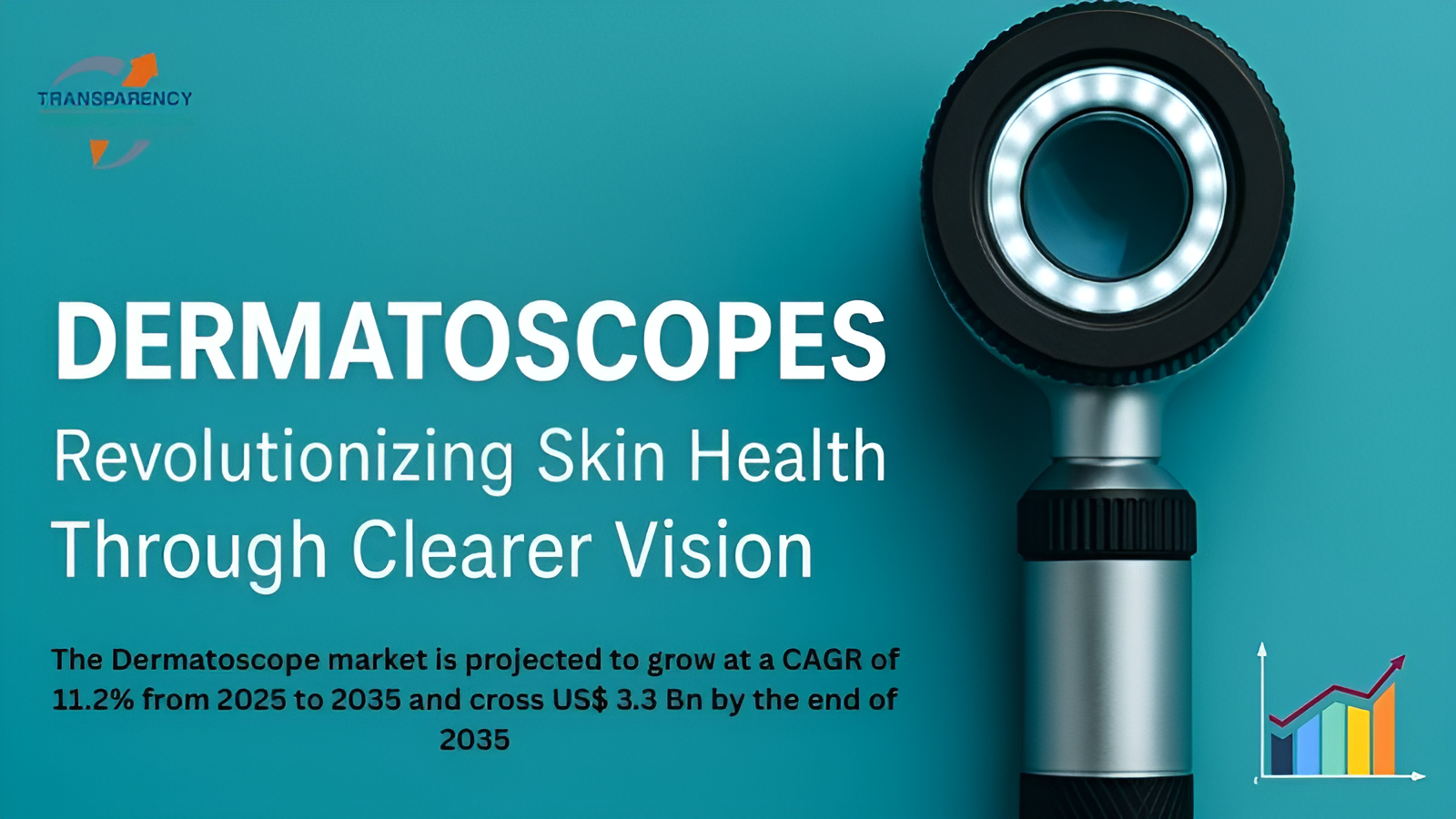
The global dermatoscope industry was valued at approximately US$ 1.0 billion in 2024, reflecting its established importance in healthcare. But what’s even more exciting is the forecast for this sector’s growth. It is projected to grow at a compound annual growth rate (CAGR) of 11.2% from 2025 to 2035 and is expected to cross US$ 3.3 billion by the end of 2035.
This dramatic growth is an indication of increasing investments in dermatology technology, increasing consciousness about skin health, and innovations that are making dermatoscopes more available, portable, and affordable.
Different types of Dermatoscopes
Dermatoscopes come in various forms to meet various clinical needs:
- Manual Dermatoscopes: These are conventional instruments that need a skilled clinician to read images. They are robust, simple in operation, and commonly used in most dermatology clinics.
- Digital Dermatoscopes: These combine magnification and light with digital cameras. Images can be saved, software-analyzed, and compared longitudinally. This is especially useful to monitor suspicious lesions or integrated with telemedicine platforms.
- Smartphone-Compatible Dermatoscopes: Leverage the cameras of smartphones, these inexpensive attachments are now being made available to general practitioners and even patients for initial screenings.
With advancements in technology, the lines between these categories are blurring, with more intelligent dermatoscopes being created and utilized.
Why Dermatoscopy is Important Beyond Skin Cancer
Whereas melanoma in its early stages hits the headlines, dermatoscopes help with skin problems of all types:
- Non-Melanoma Skin Cancers: Squamous cell and basal cell carcinoma also can be detected early.
- Benign Skin Lesions: Facilitates the discrimination of benign moles, cysts, or dermatofibromas, avoiding unnecessary interventions.
- Inflammatory Conditions: Some patterns can be used to diagnose eczema, psoriasis, and fungal infection.
- Hair and Scalp Disorders: Trichoscopy (hair and scalp dermatoscopy) aids in evaluating causes of hair loss.
The diversity of dermatoscopy renders it an effective aid in both family medicine and dermatology.
What Should Patients Know
If you have suspicious moles or a skin cancer history in your family, it makes sense to discuss dermatoscopic examination with your dermatologist. It is painless, quick, and non-surgical. More and more clinics now have computerized dermatoscopes whereby physicians can show you enlarged photographs and explain to you exactly what they see, which can enhance your education and confidence.
On top of this, some of the newer models are intended for the home or teledermatology setting, enabling remote monitoring under professional guidance — a godsend for patients in rural areas.
Future Trends: AI and Beyond
In the future, the market for dermatoscopes is full of anticipation. Artificial intelligence (AI) is being combined with digital dermatoscopy to aid doctors by scanning images to automatically identify potentially suspicious lesions. It may minimize diagnostic mistakes and accelerate consultations.
Wearable dermatoscopes, improved imaging resolution, and improved portability are some of the other developments in the pipeline.
The Business of Dermatoscopes
The growing need for early detection of skin cancer and the emergence of skin diseases globally are fueling market growth for dermatoscopes. Companies are highlighting product development, collaboration with healthcare professionals, and training sessions to stimulate dermatoscopy ability among physicians.
The global industry was valued at US$ 1.0 billion in 2024, highlighting its substantial footprint in medical diagnostics. Analysts predict that it will grow at a CAGR of 11.2% from 2025 to 2035, surging beyond US$ 3.3 billion by 2035. This promising approach shows expenses for the health care system, by using advanced technologies and awareness of skin health.
conclusion
Dermatoscope represents an ideal mix of simplicity and sophistication, which strengthens the health professionals to look deep under the skin surface and create more life game diagnosis than before. Whether it is through manual magnification or A-assisted digital imaging, these units change the worldwide dermage.
As the global industry expands, more innovation will integrate dermatoscopy available, accurate and regular skin care. Like patients and suppliers, it means healthy skin, previous interventions and gradually better results.If you’ve ever wondered how doctors spot early skin cancers or differentiate a harmless mole from a dangerous one, the dermatoscope is the answer — a shining beacon in skin health diagnostics that’s only set to grow brighter in the years ahead.