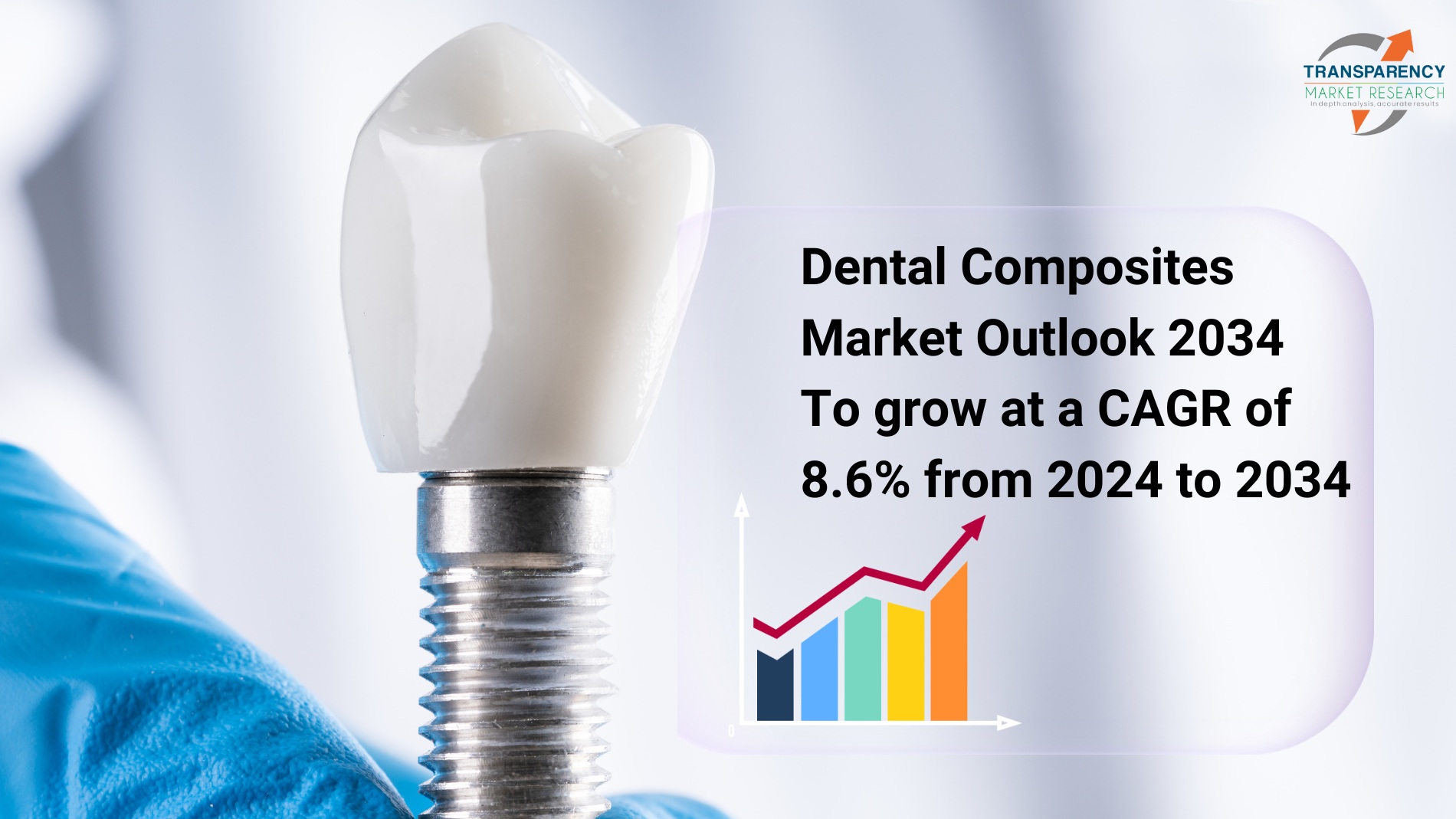
The global dental composites market was valued at US$ 68.5 million in 2023 and is projected to grow at a CAGR of 8.6% from 2024 to 2034, reaching US$ 171.3 million by 2034. Driven by rising demand for aesthetic dentistry and increased disposable incomes, the industry is transforming rapidly.
However, beneath this optimistic outlook lie significant challenges that could impede growth. From material limitations to regional disparities and regulatory hurdles, stakeholders must navigate a complex landscape to capitalize on opportunities. This article explores the critical challenges shaping the dental composites market and what industry players should watch for in the coming decade.
Technical Limitations: Balancing Strength and Aesthetics
Dental composites are celebrated for their aesthetic appeal, durability, and minimally invasive application. However, they face limitations in handling large cavities or high-pressure areas, posing a persistent challenge. Although traditional metal amalgams are less visually appealing, they offer superior strength for extensive restorations.
Meanwhile, composites are ideal for small-to-medium fillings but are often criticized for wear and tear in molars or areas subjected to heavy chewing forces. This raises a crucial question: Can composites match the strength of metal alternatives?
Key Insights
- Nanofill Composites Leading the Way: The dominance of nanofill composites, known for their strength, polish retention, and natural appearance, reflects the industry’s progress. Innovations like 3M’s Filtek Universal Restorative (2021) and DMG America’s Ecosite Elements (2023) highlight advancements in nanohybrid technologies. Yet, even these breakthroughs struggle to match the longevity of metal options in high-stress applications.
- R&D Efforts to Bridge the Gap: Companies are heavily investing in R&D to enhance mechanical properties. For instance, Dental’s SimpliShade Bulk Fill (2023) aims to streamline restorations for larger cavities while maintaining aesthetics. Nonetheless, achieving parity with amalgams remains elusive, pushing clinicians to cautiously select materials based on case specifics.
High Competition and the Innovation Imperative
The dental composites market is fiercely competitive, with industry giants like 3M, Dentsply Sirona, and Ivoclar Vivadent dominating through relentless innovation. The rise of 3D printing, CAD/CAM systems, and bioactive materials has raised the stakes, compelling smaller players to accelerate R&D or risk obsolescence.
Market Dynamics
- 3D Printing & Digital Dentistry: Companies leveraging 3D printing for customized restorations gain an edge in precision and efficiency. However, the high cost of these technologies limits accessibility for smaller clinics and emerging markets.
- Product Launches: Recent product launches like Ultradent’s Transcend (2023) and Shofu’s FIT SA (2020) illustrate the race to develop universal, user-friendly composites. These innovations aim to reduce procedural steps, appealing to time-conscious dentists.
Challenge
Continuous innovation demands substantial investment, squeezing margins for mid-sized firms. Furthermore, patents and proprietary technologies (e.g., Shofu’s Giomer Tech) create barriers to entry, consolidating market power among industry leaders.
Regional Disparities: Europe’s Dominance vs. Global Accessibility
Europe accounted for the largest market share in 2023, driven by advanced healthcare infrastructure, high dental care standards, and strong demand for cosmetic procedures. However, this regional concentration underscores challenges in global market penetration.
Regional Breakdown
- Europe: Germany and France lead in adoption due to cutting-edge facilities and high patient awareness. The UK’s focus on preventive care further boosts composite use.
- Asia-Pacific: Emerging economies like India and China show potential but lag due to limited access to advanced materials and affordability issues.
- North America: High disposable incomes and aesthetic trends propel growth. Yet, cost pressures persist in underserved communities.
Barriers to Expansion
- Cost: Premium composites remain prohibitively expensive in low-income regions.
- Infrastructure Gaps: Many developing regions lack the dental technology (e.g., CAD/CAM) required for advanced composite applications.
- Training Shortages: Skilled professionals adept in modern restorative techniques are scarce outside urban hubs.
Aesthetic Demand vs. Functional Performance
The surge in aesthetic dentistry, fueled by social media and celebrity culture, has shifted patient priorities. While composites excel in mimicking natural teeth, balancing beauty with durability remains an ongoing challenge.
Social Media Influence
A 2022 survey revealed that 90.7% of dentists attribute rising aesthetic demand to platforms like Instagram, where “Hollywood smiles” trend. Patients increasingly request veneers and whitening, often overlooking functional considerations.
Material Trade-offs
- Translucency vs. Strength: Highly aesthetic composites may compromise wear resistance.
- Minimally Invasive Trends: Although composites enable conservative treatments, overuse in unsuitable cases risks premature failure.
Industry Adaptation
Manufacturers are prioritizing “universal” composites that blend aesthetics and resilience. For example, GC America’s Essentia (2022) combines chromatic adaptation with high strength for posterior use.
Regulatory Hurdles and Safety Standards
Stringent regulatory frameworks govern dental materials to ensure patient safety, but they complicate product launches. Compliance with ISO, FDA, and EU MDR standards requires rigorous testing, delaying time-to-market.
Case in Point
- Bioactive Composites: Products like FIT SA face additional scrutiny due to chemical interactions with tooth structures.
- 3D-Printed Composites: These must meet evolving guidelines for biocompatibility and mechanical performance.
Impact on Innovation
While regulations safeguard quality, they slow the introduction of novel materials—a critical drawback in a fast-paced market. Smaller firms, lacking resources for prolonged approvals, struggle to compete.
Navigating the Road Ahead
The dental composites market’s growth trajectory is undeniable, yet its path is fraught with challenges. Success hinges on addressing material limitations, democratizing access to technology, and aligning innovation with regulatory and educational imperatives.
Key players are already adapting—3M’s digital orthodontics and DMG’s bioactive formulations signal a shift toward multifunctional solutions. For stakeholders, the next decade demands agility: investing in R&D, expanding into underserved regions, and fostering partnerships to bridge infrastructure gaps.
Watch For
- Breakthroughs in high-strength composites for posterior restorations.
- Expansion of 3D printing in emerging markets.
- Regulatory reforms accelerating innovation without compromising safety.
In this dynamic landscape, vigilance and adaptability will separate leaders from laggards. The dental composites market’s future is bright but only for those prepared to tackle its challenges head-on.