Mental health care is undergoing a fundamental transformation as medicine moves away from generalized treatment approaches toward highly individualized solutions. At the center of this shift lies precision psychiatry, an emerging discipline that integrates genomics, biomarkers, digital tools, and advanced analytics to tailor psychiatric diagnosis and treatment to each patient. As the global mental health burden continues to rise, precision psychiatry is rapidly gaining traction as a powerful solution to improve outcomes, reduce trial-and-error prescribing, and enhance patient quality of life.
Understanding Precision Psychiatry
Precision psychiatry applies the principles of personalized medicine to mental health by leveraging genetic testing, neuroimaging, digital phenotyping, and artificial intelligence (AI). Instead of relying solely on symptom-based assessments, clinicians can use biological and behavioral data to better understand disease mechanisms, predict treatment responses, and optimize therapeutic strategies.
This approach is particularly valuable in psychiatric disorders such as depression, bipolar disorder, schizophrenia, anxiety, and post-traumatic stress disorder (PTSD), where treatment responses vary significantly across individuals. By identifying genetic markers and neurobiological signatures, precision psychiatry aims to deliver the right treatment to the right patient at the right time.
Precision Psychiatry Market Outlook 2035
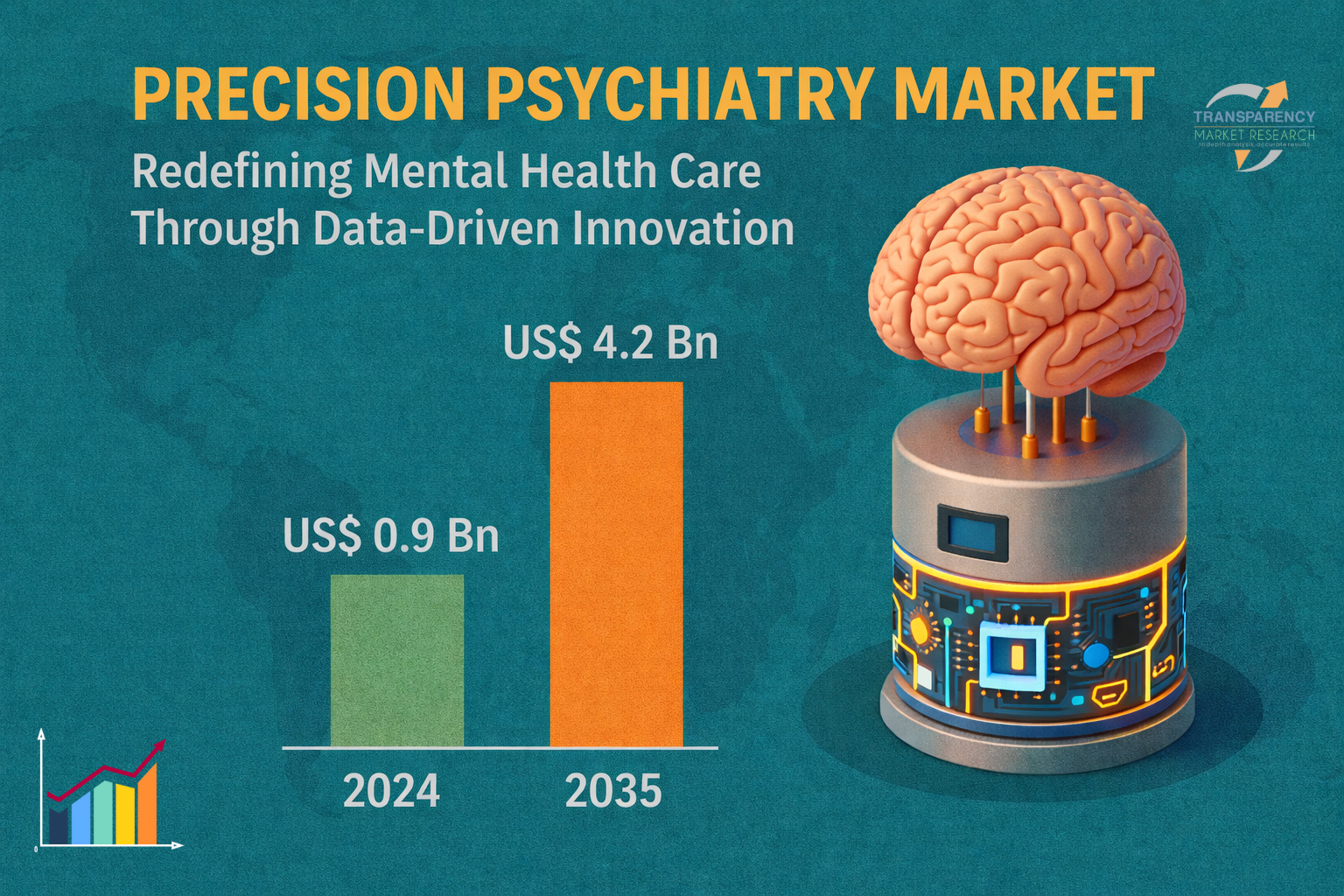
The global precision psychiatry market is experiencing rapid expansion, driven by advancements in genomics, growing awareness of personalized mental healthcare, and increased investments in mental health technologies. In 2024, the market was valued at US$ 0.9 billion and is projected to reach US$ 4.2 billion by 2035, registering a robust CAGR of 14.2% from 2025 to 2035.
This impressive growth trajectory reflects the increasing adoption of pharmacogenomics, AI-powered diagnostics, and digital mental health platforms. Rising mental health prevalence, coupled with the limitations of conventional psychiatric treatments, is compelling healthcare providers and policymakers to explore precision-driven solutions.
Key Growth Drivers Shaping the Market
Several factors are fueling the expansion of the precision psychiatry market:
- Rising Mental Health Disorders: Global increases in depression, anxiety, PTSD, and neurodevelopmental disorders are driving demand for more accurate and effective treatments.
- Advancements in Genomic Technologies: Rapid and cost-effective genetic sequencing has made psychiatric pharmacogenomic testing more accessible.
- Shift Toward Personalized Medicine: Healthcare systems are increasingly prioritizing individualized care pathways to improve clinical outcomes.
- Integration of AI and Digital Health: AI-based analytics and digital biomarkers are enhancing early diagnosis, patient monitoring, and treatment optimization.
- Supportive Research and Funding: Public and private investments are accelerating innovation in psychiatric genomics and neurotechnology.
Analysis of Key Players in the Precision Psychiatry Market
The competitive landscape of the precision psychiatry market is characterized by a mix of established diagnostics companies, genomics specialists, and emerging health technology firms. Key players actively shaping the market include:
Labcorp, Myriad Genetics, Inc., TruGenomix, Inc., GeneDx, LLC, Genomind, CNSDose, MedGenome, GeneHealth Global Research & Diagnostics, Quest Diagnostics Incorporated, Illumina, Inc., F. Hoffmann-La Roche Ltd, Bio-Rad Laboratories, Inc., QIAGEN, Thermo Fisher Scientific Inc., and Fulgent Genetics, among others.
These companies focus on expanding genomic testing capabilities, enhancing bioinformatics platforms, and collaborating with healthcare providers to integrate precision psychiatry into routine clinical practice. Strategic partnerships, product launches, and research publications remain key competitive strategies.
Key Developments in the Precision Psychiatry Market
Recent developments highlight the accelerating pace of innovation and commercialization in this space:
- July 2025: Polaris Genomics, a U.S.-based company, secured a second USD 100,000 Maryland Industrial Partnership grant to further validate its PTSD genomic test. This funding supports faster commercialization of precision psychiatry diagnostics.
- June 2025: GeneDx published results from its SeqFirst study in The Journal of Pediatrics, demonstrating that rapid genomic testing reduced pediatric diagnostic timelines from 289 days to just 13 days, reinforcing the value of early genomic intervention.
- May 2025: GrayMatters Health (GMH) launched the Prism™ Suite, a next-generation portfolio designed to empower providers and improve patient outcomes. The suite includes an innovative depression protocol that helps patients regulate brain activity using a reward-system biomarker.
- October 2024: UK-based Psyomics Ltd partnered with the Priory Group to deploy its AI-driven digital triage and assessment platform, Censeo, across multiple clinical locations, improving early mental health screening and care pathways.
Future Outlook and Opportunities
The future of precision psychiatry looks highly promising as technological convergence continues to reshape mental healthcare delivery. Ongoing research into biomarkers, machine learning algorithms, and digital therapeutics will further refine diagnostic accuracy and treatment personalization. Additionally, growing acceptance among clinicians and patients is expected to drive wider adoption across hospitals, specialty clinics, and telepsychiatry platforms.
As mental health challenges become increasingly complex, precision psychiatry offers a scalable, evidence-based pathway to deliver more effective, patient-centered care. With sustained innovation and supportive regulatory frameworks, the market is well-positioned to play a transformative role in the global mental healthcare ecosystem over the next decade.