Fuel cells are changing power generation systems as they are being used in a variety of applications. Fuel cells are regarded as a key component in resolving energy and environmental challenges to achieve sustainable energy production and fulfill modern society’s growing needs.
Fuel cells convert energy through electrochemical reactions as well as heat and mass transfer mechanisms. Scientists are actively attempting to advance and improve the technical capabilities of fuel cells so that they may be installed in power plants, automobiles, submarines, power supply units (stationary and mobile), and even space power supply. This blog will delve into some crucial aspects of fuel cells and fuel cell technology.
Working of Fuel Cells
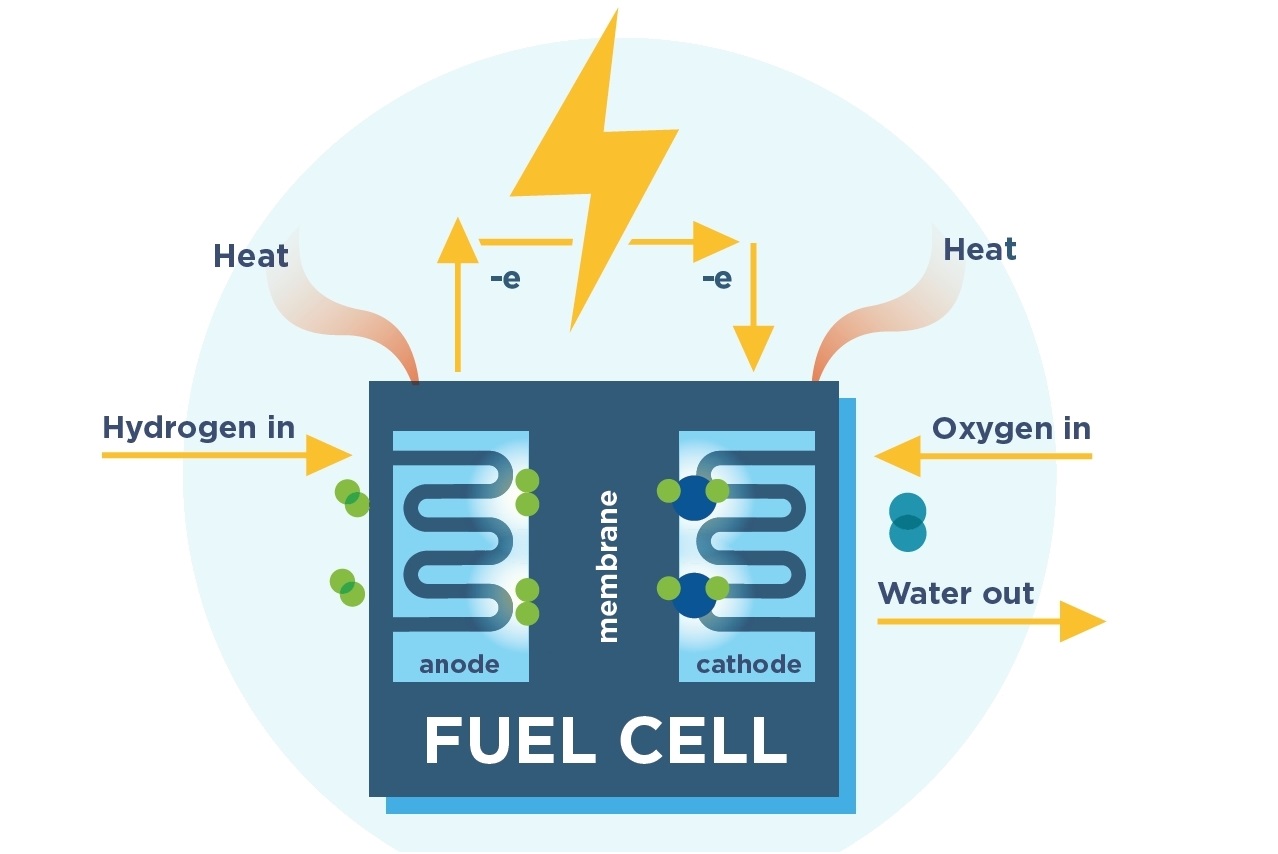
Fuel cells function similarly to batteries, except they do not need to be recharged. They generate heat and power as long as fuel is available. An electrolyte surrounds the two electrodes—the negative, or anode, and the positive, or cathode—that make up a fuel cell. Air is delivered to the cathode while fuel, like as hydrogen, is delivered to the anode.
At the anode of a hydrogen fuel cell, a catalyst divides the electrons and protons from hydrogen molecules, which go in different directions to the cathode. Electrons pass across an external circuit, causing electricity to flow. Protons go through an electrolyte to reach the cathode, combining oxygen and electrons to form water and heat.
Some Crucial Applications of Fuel Cells
Some practical uses of fuel cell technology are:
Warehouse Logistics
Clean trucks, pallet jacks, forklifts, and other equipment are powered by hydrogen fuel cells by dozens of companies with substantial warehousing and distribution requirements.
The switch to hydrogen technology reduces the logistics industry’s carbon footprint while simultaneously increasing productivity and improving indoor air quality for workers.
Mobile Power Generation
Hydrogen provides flexible possibilities for producing power on the go. NASA made some of the first hydrogen fuel cells to power spacecraft like shuttles and rockets.
Other new fuel cell and technology applications are emerging in this domain. For instance, General Motors intended to power mobile generators using hydrogen fuel cells in 2022.
Buses
Other public transportation applications, such as hydrogen fuel cell buses, are being explored for hydrogen power. By 2023, there will be more hydrogen-powered electric buses in several regions of Europe. States like Nevada, California, and Philadelphia are building hydrogen bus systems as part of the US’s ongoing technological experimentation.
Boats and Submarines
Numerous maritime applications have found a home for hydrogen fuel cells. Certain vessels, such as the Energy Observer, produce hydrogen for fuel cell systems using onboard photovoltaic cells and wind turbines. Hydrogen fuel cells provide a long-range, peaceful cruising, and low exhaust heat alternative to nuclear power for military stealth ships such as the German Type 212.
Conclusion
Hydrogen fuel may be effectively created from renewable energy sources through electrolysis or as a petroleum byproduct. It is a widely accessible fuel. It can be transported and refueled more easily than other batteries. This is because fuel cells contain liquid or pressurized gas, eliminating the need for lengthy charging times.
Electrolyzers and fuel cells are a viable alternative for strong, effective, 100% clean energy storage and delivery globally, particularly as hydrogen production shifts to renewable sources.


