A beacon of innovation, quantum computing promises to revolutionize the way information is processed. For decades, humans relied on classical computers based on binary bits and classical physics. With classical computing power reaching its limits, quantum computing offers unprecedented rates of solving complex problems.
Quantum computers are believed to complement conventional technologies rather than replace them. Quantum computers are also capable of creating completely private communication, challenging current methods of cryptography.
Upon exploring the complexities of quantum mechanics, it becomes apparent that quantum computing transcends faster calculations by harnessing the peculiar nature of quantum particles to revolutionize the way in which information is processed.
Basic Quantum Mechanics: More Than Binary Bits
Quantum mechanics is the enigmatic world at the heart of quantum computing. For quantum computers to be able to perform computations with their potential, it is vital to understand superposition and entanglement. Because quantum bits (qubits) are capable of occupying multiple states at once, quantum systems exhibit unparalleled parallelism.
The Superposition Effect in Quantum Parallelism
The superposition principle is the basis of quantum parallelism, one feature that sets quantum computing apart from other types of computing. The availability of multiple states for qubits in quantum computers enables simultaneous exploration of multiple solutions. The ability to evaluate multiple outcomes simultaneously is particularly useful when solving optimization problems, simulating quantum systems, or solving large-scale problems.
An integral part of quantum algorithm design is maximizing superposition’s potential to facilitate the exploration and evaluation of solutions more quickly than classical computers.
Stability and Decoherence at the Quantum Frontier
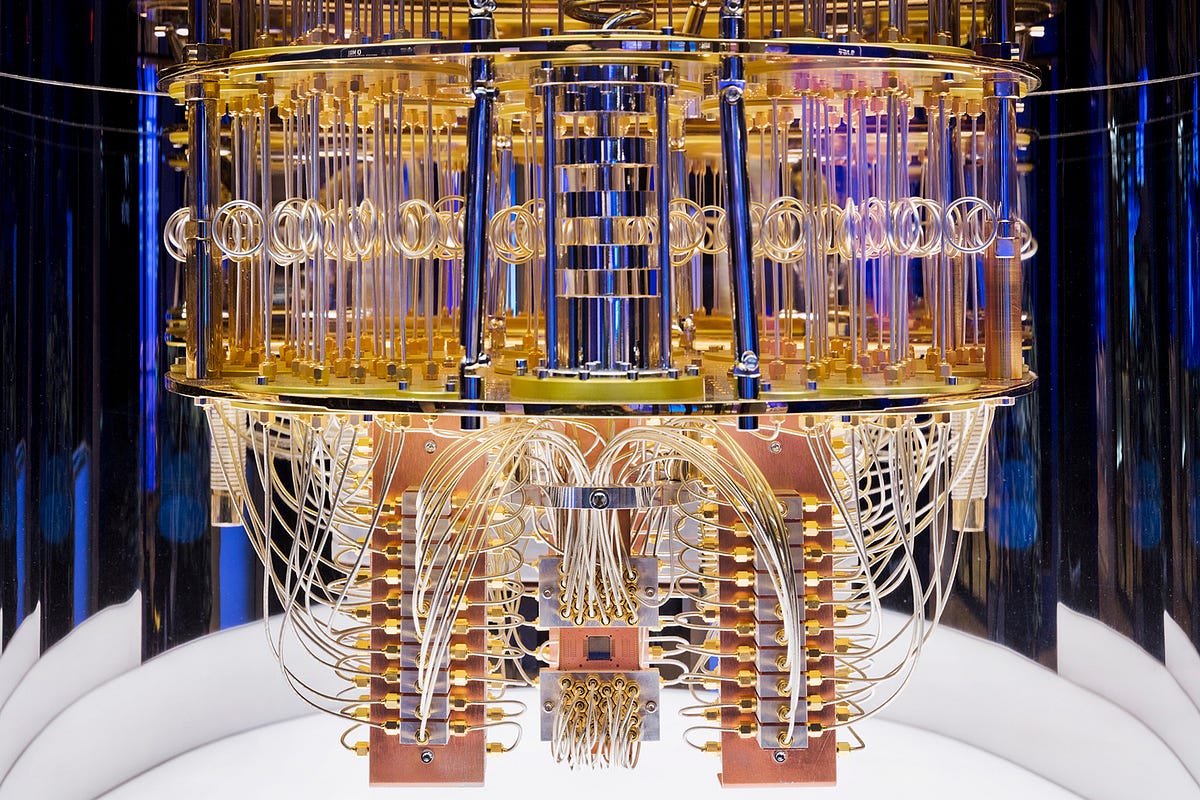
Although quantum computing has significant potential, it faces significant challenges. External interference, caused by the delicate nature of qubits, can cause them to lose their coherence. Quantum states of qubits can only be maintained for extended periods at extremely low temperatures, which poses many engineering challenges.
Temperature requirements are also closely related to stability. Computers using quantum technology maintain near-absolute zero temperatures to eliminate interference and enhance qubit coherence. Creating scalable quantum computers that can handle such extreme conditions is a complex engineering challenge.
A number of advances are made as the quantum computing community strives to overcome these challenges, including error-correction codes, fault-tolerant quantum computers, and the expansion of qubit coherence times. Quantum computers cannot be a practical reality until these challenges are addressed.
Envisioning the Future of Quantum Computing
Quantum computing challenges conventional notions of information processing, combining physics with computing. Research toward the development of quantum computers paves the way for a future in which computing is no longer limited by classical concepts, enabling new discoveries and innovations. The potential of quantum computing must be recognized in order for a quantum future to be realized.
A wide range of potential applications is possible, ranging from accelerating machine learning to revolutionizing cryptography and optimization. Research and development are making strides toward realizing the quantum dream, despite obstacles still facing the field. Despite the quantum mystique still evoking a world of computation beyond classical limitations, a new era of computing is just around the corner.