The global healthcare industry is witnessing a strong push toward preventive diagnostics, and the Cervical Cancer Diagnostic Tests Market stands at the forefront of this transformation. With growing awareness about women’s health, expanding screening programs, and technological innovation in molecular diagnostics, the market is set for steady growth over the next decade.
Market Outlook 2036: Strong Growth Driven by Screening Awareness
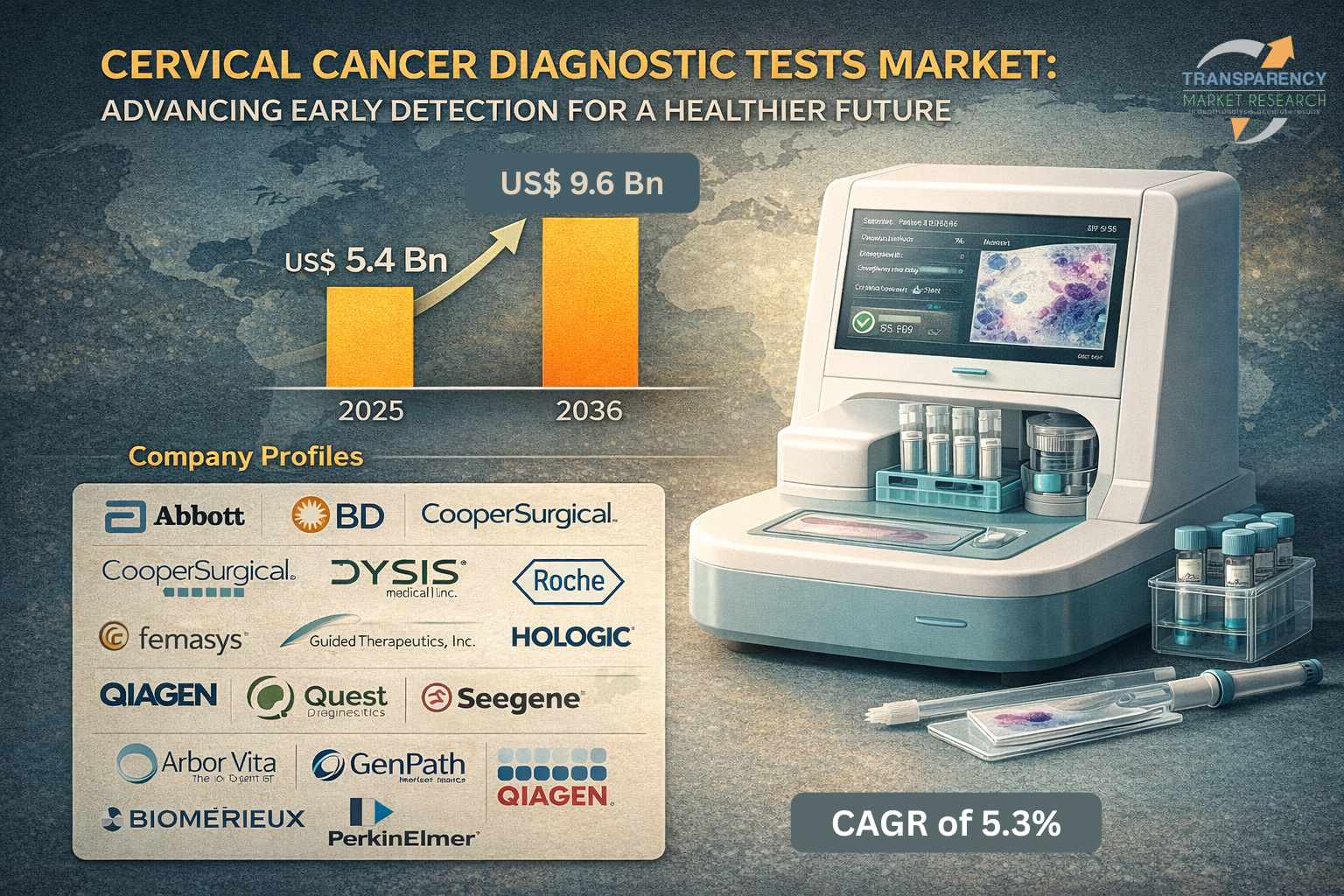
The global cervical cancer diagnostic tests market was valued at US$ 5.4 Billion in 2025 and is projected to reach US$ 9.6 Billion by 2036, expanding at a CAGR of 5.3% from 2026 to 2036.
This growth trajectory reflects the increasing global focus on early detection. Cervical cancer remains one of the most preventable yet life-threatening cancers among women. Timely screening through Pap smears, HPV testing, colposcopy, and advanced molecular diagnostics significantly reduces mortality rates.
Governments and health organizations worldwide are investing heavily in structured screening programs, particularly in developing economies where cervical cancer incidence remains high. The introduction of HPV vaccination campaigns further complements diagnostic testing, strengthening the overall prevention ecosystem.
Key Growth Drivers Shaping the Market
1. Rising Incidence and Awareness
Despite advancements in preventive care, cervical cancer continues to affect millions of women globally. Increasing awareness campaigns by healthcare institutions and NGOs are encouraging routine screening, thereby driving demand for diagnostic tests.
2. Technological Advancements in Molecular Diagnostics
The transition from conventional cytology-based tests to molecular and DNA-based diagnostics has revolutionized early detection accuracy. HPV DNA testing, biomarker identification, and AI-assisted colposcopy are enhancing sensitivity and reducing false negatives.
Companies are investing in automated platforms and point-of-care testing devices to make diagnostics faster, more affordable, and accessible.
3. Government-Supported Screening Programs
Many countries are implementing nationwide screening initiatives to reduce cancer burden. Subsidized diagnostic services and reimbursement policies are positively impacting market penetration.
4. Growing Healthcare Infrastructure in Emerging Markets
Emerging economies in Asia-Pacific, Latin America, and parts of Africa are expanding diagnostic laboratories and hospital networks. This infrastructure development is creating new revenue opportunities for manufacturers and service providers.
Competitive Landscape: Key Players Driving Innovation
The global cervical cancer diagnostic tests market is moderately consolidated, with major players focusing on product innovation, partnerships, and geographic expansion.
Some of the leading companies operating in this market include:
- Abbott
- BD
- CooperSurgical, Inc.
- DYSIS Medical, Inc.
- F. Hoffmann-La Roche Ltd.
- Femasys, Inc.
- Guided Therapeutics, Inc.
- Hologic, Inc.
- QIAGEN N.V.
- Quest Diagnostics Incorporated
- Seegene, Inc.
- Arbor Vita Corporation
- GenPath Diagnostics
- bioMérieux
Strategic Focus Areas of Key Companies
Product Innovation:
Market leaders are investing in next-generation HPV testing kits and integrated screening platforms that combine cytology with molecular testing.
Partnerships and Collaborations:
Collaborations with hospitals, public health agencies, and research institutions are helping companies expand their diagnostic footprint globally.
Geographical Expansion:
Emerging markets represent high-growth regions due to unmet screening needs. Companies are entering Asia-Pacific and Latin American markets through distribution partnerships and local manufacturing.
Regional Insights
North America
North America holds a significant market share due to advanced healthcare infrastructure, high awareness levels, and well-established screening programs. The presence of leading diagnostic companies further strengthens regional dominance.
Europe
Europe benefits from structured cervical cancer screening policies supported by public healthcare systems. Continuous research in molecular diagnostics enhances market stability.
Asia-Pacific
Asia-Pacific is expected to witness the fastest growth rate during the forecast period. Rising awareness, improving healthcare access, and government-backed cancer control programs are accelerating adoption.
Rest of the World
Regions such as Latin America and Africa are gradually increasing screening initiatives. International health organizations are playing a critical role in expanding diagnostic accessibility.
Emerging Trends to Watch
- AI-powered colposcopy systems
- Self-sampling HPV test kits
- Portable and point-of-care diagnostic devices
- Integration of digital health platforms for screening management
Self-sampling HPV kits, in particular, are transforming screening accessibility by enabling women to collect samples privately at home. This innovation is expected to significantly boost participation rates in under-screened populations.
Future Outlook: Prevention-Centric Healthcare
The cervical cancer diagnostic tests market is poised for sustainable expansion through 2036. As global healthcare systems shift from treatment-focused to prevention-driven models, diagnostic testing will play a central role.
Increased R&D investment, expanding laboratory networks, and digital integration are expected to enhance testing accuracy and affordability. Moreover, the convergence of vaccination programs and diagnostic screening will strengthen comprehensive cervical cancer control strategies worldwide.
With the market projected to nearly double in value by 2036, stakeholders—including manufacturers, investors, healthcare providers, and policymakers—have substantial opportunities to contribute to improved women’s health outcomes globally.
Conclusion
The Cervical Cancer Diagnostic Tests Market is not just growing—it is evolving. Backed by technological advancements, policy support, and rising health awareness, the industry is moving toward more accurate, accessible, and patient-friendly diagnostic solutions.
As the world intensifies efforts to eliminate cervical cancer as a public health threat, diagnostic testing will remain the cornerstone of early detection and lifesaving intervention.