In the rapidly evolving world of life sciences, the ability to preserve living cells without compromising their viability has become a cornerstone of modern research and healthcare. Cell cryopreservation, the process of storing cells at ultra-low temperatures for long-term use, is no longer confined to academic laboratories. It is now a critical enabler of regenerative medicine, cell-based therapies, drug discovery, fertility preservation, and biobanking initiatives worldwide.
As personalized medicine gains momentum and cell therapies move closer to mainstream clinical adoption, cryopreservation technologies are playing a silent yet transformative role. From stem cells and immune cells to reproductive and primary cells, maintaining cellular integrity during storage and transport has become essential for both research continuity and patient safety.
Growing Importance Across Healthcare and Biotechnology
The surge in demand for advanced therapeutics such as CAR-T cell therapy, stem cell transplantation, and regenerative medicine has significantly increased the need for reliable cryopreservation solutions. Pharmaceutical and biotechnology companies are investing heavily in scalable storage systems, cryoprotective media, and automated freezing technologies to ensure consistent cell quality across global supply chains.
At the same time, government-backed biobanks and academic institutions are expanding their cell repositories to support long-term disease research and population-based studies. These trends are collectively accelerating the adoption of cell cryopreservation across multiple end-use sectors.
Market Growth Snapshot
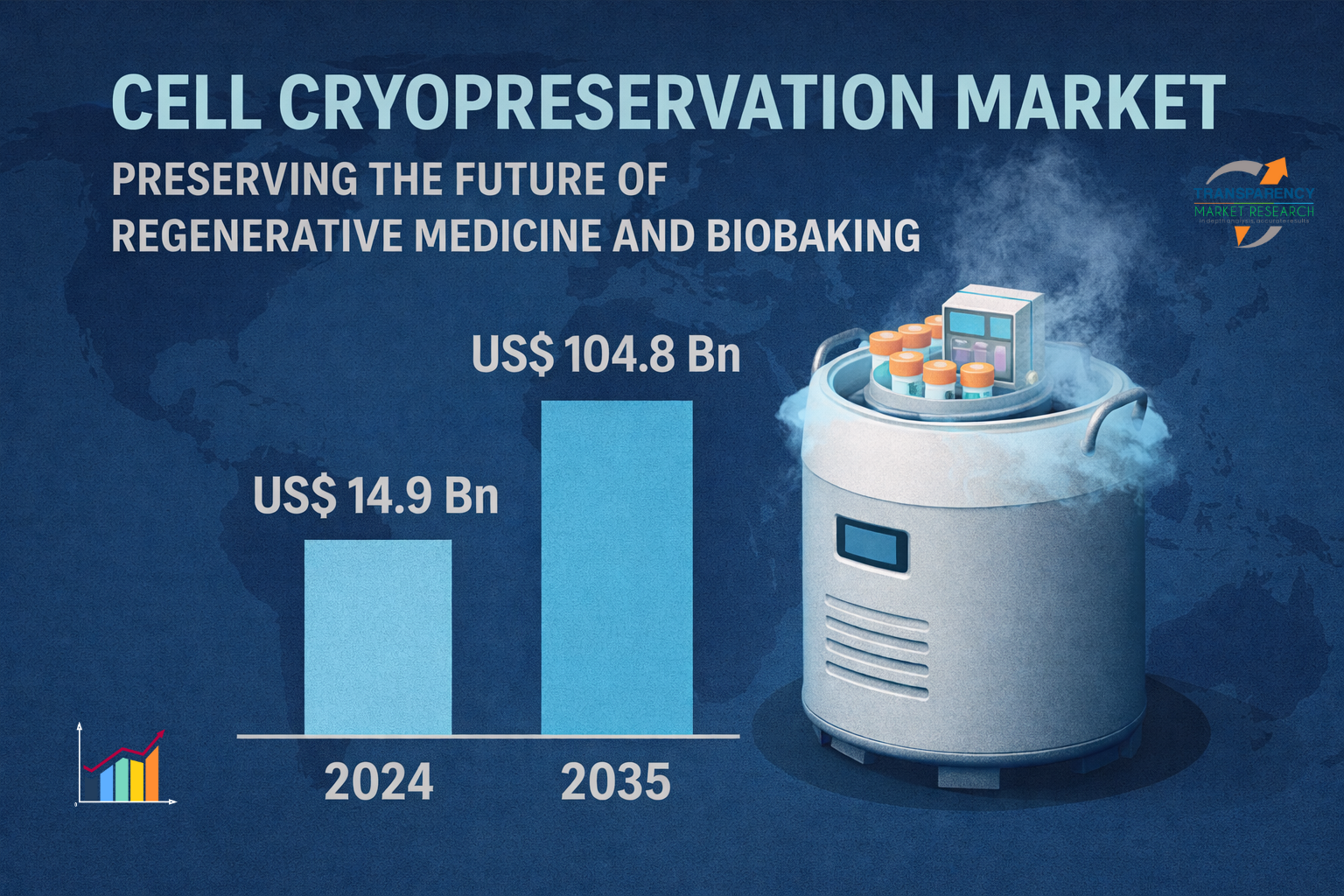
The global cell cryopreservation market has witnessed remarkable expansion in recent years, driven by technological advancements and rising clinical applications. In 2024, the market was valued at US$ 14.9 billion and is projected to surge to US$ 104.8 billion by 2035, registering an impressive compound annual growth rate (CAGR) of 19.4% from 2025 to 2035. This strong growth trajectory underscores the increasing reliance on cryopreservation technologies across life sciences, healthcare, and biopharmaceutical manufacturing.
Key Drivers Fueling Market Expansion
One of the primary drivers of the cell cryopreservation market is the rapid advancement of cell and gene therapies. As these therapies transition from clinical trials to commercial-scale production, the need for standardized and reproducible cryopreservation protocols becomes critical. Any variation in storage conditions can directly impact cell potency and therapeutic outcomes.
Additionally, the rising prevalence of chronic diseases such as cancer, autoimmune disorders, and neurodegenerative conditions has amplified research efforts focused on cell-based treatments. Cryopreservation enables researchers to store rare and valuable cell samples for repeated testing, reducing costs and improving experimental reliability.
The increasing use of assisted reproductive technologies (ART) is another major contributor. Cryopreservation of sperm, eggs, and embryos has become a routine practice in fertility clinics, further strengthening market demand.
Technological Innovations Shaping the Industry
Innovation remains at the heart of the cell cryopreservation market. Manufacturers are introducing advanced cryoprotectants that minimize ice crystal formation and reduce cellular damage during freezing and thawing. Automated and controlled-rate freezers are gaining popularity, especially in large-scale biopharmaceutical facilities, as they ensure consistency and regulatory compliance.
Moreover, the integration of digital monitoring systems and cloud-based temperature tracking has enhanced storage safety, particularly during transportation. These technologies are proving vital for global clinical trials and cross-border shipment of cell therapies.
Analysis of Key Players in the Cell Cryopreservation Market
The competitive landscape of the cell cryopreservation market is characterized by the presence of established life science companies and specialized solution providers. Leading manufacturers are focusing on product innovation, strategic collaborations, and expansion of their global footprint to strengthen their market position.
Prominent players operating in the global cell cryopreservation market include Thermo Fisher Scientific Inc., Merck KGaA, Sartorius AG, BioLife Solutions Inc., PromoCell GmbH, Lonza Group Ltd, HiMedia Laboratories, Creative Biolabs, Corning Incorporated, Pluristyx Inc., Helmer Scientific Inc., Cardinal Health, Takara Bio Inc., STEMCELL Technologies, and GE HealthCare, among others. These companies offer a wide range of cryopreservation media, storage systems, freezers, and ancillary solutions tailored for research, clinical, and commercial applications.
Regional Outlook and Emerging Opportunities
North America continues to dominate the cell cryopreservation market, supported by strong biotechnology infrastructure, high R&D spending, and early adoption of advanced therapies. Europe follows closely, driven by robust regulatory frameworks and increasing investment in regenerative medicine.
Meanwhile, the Asia Pacific region is emerging as a high-growth market due to expanding biopharmaceutical manufacturing, rising healthcare expenditure, and growing awareness of fertility preservation. Countries such as China, India, Japan, and South Korea are witnessing increased investments in biobanking and cell therapy research, creating lucrative opportunities for market players.
Future Outlook: A Market Poised for Long-Term Growth
Looking ahead, the cell cryopreservation market is poised for sustained growth as cell-based therapies become more accessible and widely adopted. Continued innovation in cryoprotective solutions, automation, and cold-chain logistics will further enhance market scalability and reliability.
As the life sciences industry moves toward more personalized and precision-driven treatments, cell cryopreservation will remain a foundational technology—quietly preserving the building blocks of tomorrow’s medical breakthroughs. For stakeholders across research, healthcare, and biopharma, this market represents not just growth potential, but a vital link in the future of advanced medicine.


