Osteoporosis has emerged as one of the most prevalent bone disorders worldwide, particularly among aging populations. Characterized by reduced bone density and increased risk of fractures, the condition has become a major public health concern. With growing awareness, improved diagnostic techniques, and continuous pharmaceutical innovation, the global osteoporosis drugs market is steadily expanding. Healthcare providers, pharmaceutical companies, and research institutions are increasingly investing in treatments that help prevent bone loss and improve skeletal strength.
Market Outlook
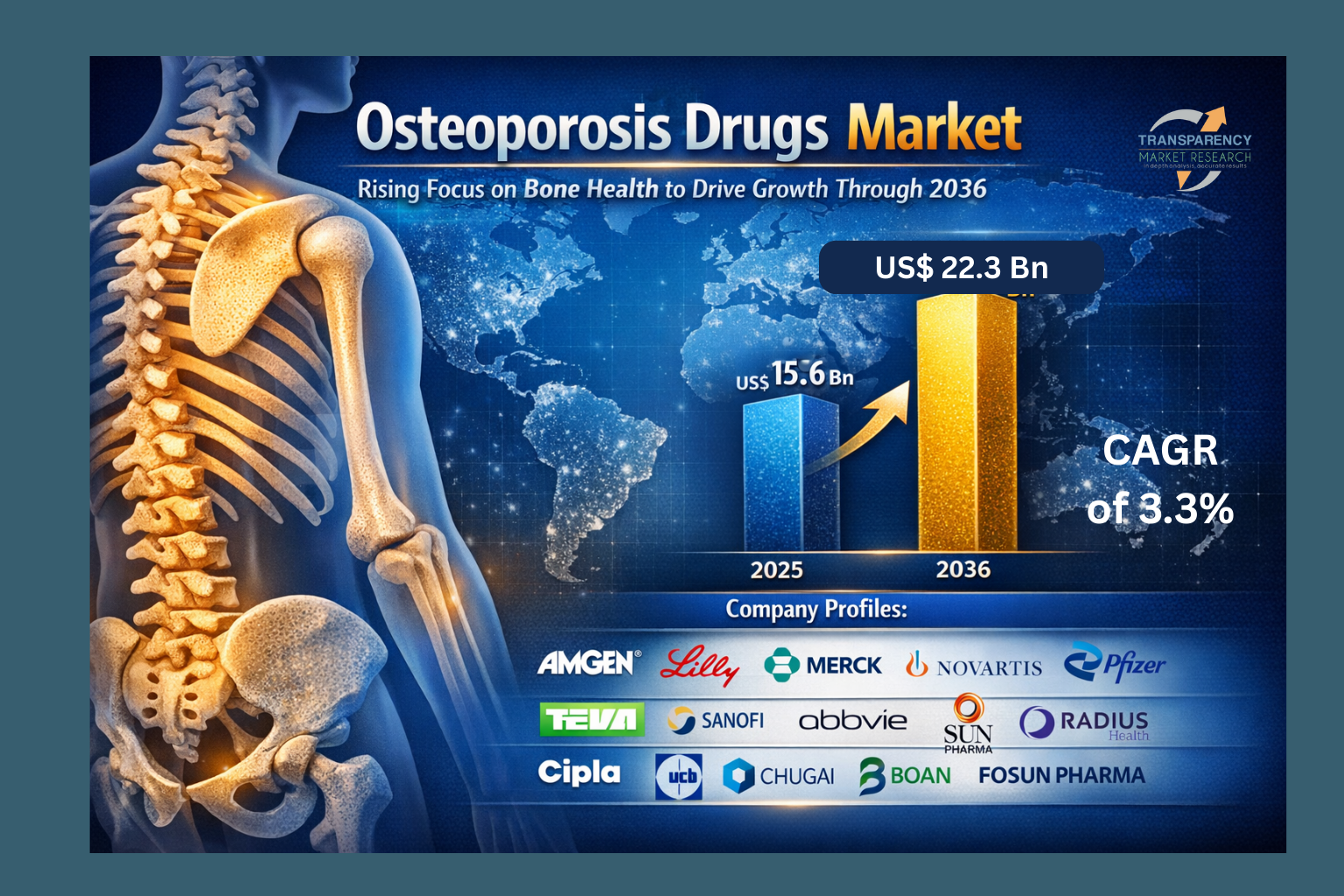
The global osteoporosis drugs market continues to demonstrate stable growth as the demand for effective bone health therapies rises. The market was valued at US$ 15.6 billion in 2025 and is projected to reach US$ 22.3 billion by 2036, expanding at a CAGR of 3.3% from 2026 to 2036. This growth trajectory is largely attributed to the increasing geriatric population, rising incidence of bone-related diseases, and growing awareness about early diagnosis and preventive healthcare.
Osteoporosis affects millions of individuals worldwide, particularly postmenopausal women and elderly individuals. As life expectancy continues to increase across developed and emerging economies, the number of patients requiring long-term osteoporosis treatment is also rising. This trend is expected to create sustained demand for innovative drug therapies throughout the forecast period.
Rising Aging Population Boosting Market Demand
One of the primary factors fueling the osteoporosis drugs market is the rapidly aging global population. Aging significantly increases the risk of bone density loss, making elderly individuals more susceptible to fractures and skeletal complications. According to global health estimates, osteoporosis-related fractures are expected to increase substantially in the coming decades.
Governments and healthcare organizations are also emphasizing early diagnosis and treatment of bone disorders. Regular bone density screenings and preventive treatments are becoming more common, helping reduce the long-term healthcare burden associated with osteoporosis-related fractures. These initiatives are contributing to the steady expansion of the market.
Advancements in Drug Therapies
The pharmaceutical industry has made significant progress in developing advanced osteoporosis treatments. Traditional therapies such as bisphosphonates remain widely used; however, newer biologic drugs and targeted therapies are transforming treatment approaches. These innovations are designed to stimulate bone formation, reduce bone resorption, and improve overall skeletal strength.
Biologic therapies, monoclonal antibodies, and hormone-based treatments are gaining popularity due to their improved efficacy and patient outcomes. Additionally, pharmaceutical companies are focusing on developing long-acting drugs that require fewer doses, improving patient compliance and convenience.
Continuous research in bone metabolism and drug delivery technologies is expected to introduce more effective treatment options in the coming years, further strengthening the growth prospects of the osteoporosis drugs market.
Increasing Awareness and Preventive Healthcare
Another important factor supporting market growth is the rising awareness regarding bone health. Public health campaigns and educational initiatives are encouraging individuals to adopt preventive strategies such as balanced nutrition, calcium and vitamin D supplementation, and regular exercise.
Healthcare professionals are also emphasizing early intervention, which helps slow disease progression and reduce fracture risks. With improved healthcare access and increasing health literacy, more patients are seeking medical treatment for osteoporosis, thereby supporting market expansion.
Challenges in the Market
Despite promising growth prospects, the osteoporosis drugs market faces several challenges. One major concern is the potential side effects associated with long-term use of certain medications. Some patients discontinue therapy due to adverse effects, which can impact treatment adherence.
Additionally, the availability of generic drugs and pricing pressures in several markets may influence revenue growth for pharmaceutical companies. However, continued innovation and the development of safer therapies are expected to address these concerns over time.
Competitive Landscape
The global osteoporosis drugs market is highly competitive, with several leading pharmaceutical companies focusing on research, drug development, and strategic collaborations to strengthen their market presence. Companies are investing heavily in clinical trials, biologic drug development, and innovative treatment technologies to address unmet medical needs in osteoporosis care.
Some of the prominent players operating in the market include Amgen Inc., Eli Lilly and Company, Merck & Co., Inc., Novartis AG, Pfizer Inc., Teva Pharmaceutical Industries Ltd., Sanofi, AbbVie Inc., Sun Pharmaceutical Industries Ltd., Radius Health, Inc., Cipla Limited, UCB S.A., Chugai Pharmaceutical Co., Ltd., Boan Biotech, and Shanghai Fosun Pharmaceutical (Group) Co., Ltd. These companies are continuously expanding their product portfolios and investing in advanced therapies aimed at improving patient outcomes.
Strategic partnerships, acquisitions, and geographic expansion are also common strategies adopted by key market participants to enhance their competitive advantage.
Future Outlook
Looking ahead, the osteoporosis drugs market is expected to maintain steady growth driven by demographic shifts, technological advancements, and increasing healthcare awareness. Emerging economies are likely to present significant opportunities due to improving healthcare infrastructure and rising diagnosis rates.
Moreover, ongoing research in personalized medicine and targeted biologic therapies could redefine osteoporosis treatment in the coming years. Pharmaceutical companies that prioritize innovation and patient-centric therapies are likely to gain a strong foothold in the evolving market landscape.
In conclusion, the global osteoporosis drugs market is poised for consistent growth through 2036. With the rising global burden of osteoporosis and continuous advancements in drug development, the industry will remain a critical segment of the broader pharmaceutical market, supporting millions of patients in maintaining stronger and healthier bones.